
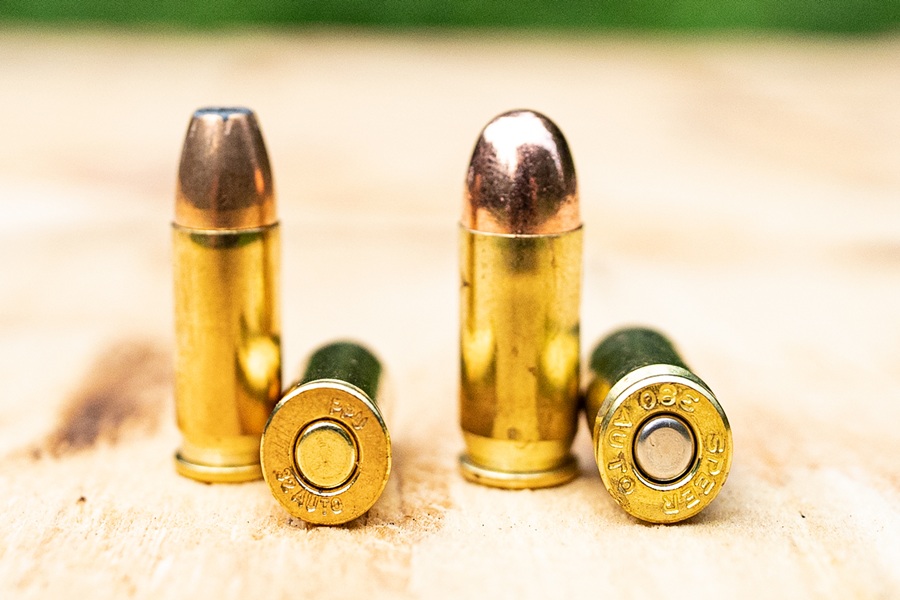
Overview of .380 ACP and .32 ACP
When discussing the .380 ACP (Automatic Colt Pistol) and .32 ACP, we are examining two calibers that have been popular choices for concealed carry, particularly in compact and easily concealable handguns. Each has a rich history and distinct characteristics, making them suitable for different types of users depending on their preferences.
A Brief History
- .380 ACP: Developed by John Browning in 1908, the .380 ACP was designed as a self-defense cartridge. It is often referred to as the “9mm Short” (9x17mm) due to its similarities to the more powerful 9mm Luger but with reduced dimensions and power. Over time, it gained popularity among civilian shooters seeking an effective cartridge for pocket pistols.
- .32 ACP: Also created by John Browning, this cartridge came earlier in 1899 and was initially geared toward semi-automatic pistols. It became widely adopted by European law enforcement agencies during the early 20th century due to its reliability in small-framed firearms.
Key Differences:
| Feature | .380 ACP | .32 ACP |
| Caliber | 9mm (.355 inches) | 7.65mm (.312 inches) |
| Bullet Weight Range | Typically 85-100 grains | Typically 60-75 grains |
| Muzzle Velocity | ~900-1,000 fps | ~1,000-1,200 fps |
| Energy | ~190 ft-lbs | ~130 ft-lbs |
The chart illustrates that the .380 ACP is generally larger and more powerful than its smaller counterpart.
Modern Usage
Both calibers are commonly chambered in small pistols designed for easy concealment. The choice between them often comes down to personal preferences such as recoil tolerance, stopping power needs, and firearm size.
- The .380 ACP is favored by those who prioritize stopping power while still maintaining a manageable recoil profile.
- The .32 ACP, on the other hand, caters to shooters who need minimal recoil for better accuracy or easier handling but are willing to trade off some stopping power.
Ultimately, understanding these two calibers’ historical context and technical differences lays a foundation for comparing their performance in terms of practicality and effectiveness for pocket carry scenarios.
Size and Concealability Differences
When choosing a pocket-carry firearm, size and concealability are often two of the most critical factors. Both .380 ACP and .32 ACP handguns are generally designed to be compact, but there are meaningful differences between the two in terms of dimensions and ease of concealment.
Compactness of .380 ACP Firearms
- Typical Dimensions: .380 ACP pistols tend to be small enough to fit in a pocket or inside-the-waistband holster comfortably. However, they are slightly larger than .32 ACP handguns due to the need to accommodate a more powerful cartridge.
- Weight: Most .380 ACP firearms weigh between 10 and 17 ounces unloaded. While still lightweight, this added weight can make them slightly more noticeable when carried in lighter clothing.
- Pocket Fit: For most users, a .380 ACP pistol can fit in a pocket holster or jacket pocket without difficulty. However, tight-fitting pants may reveal printing (the visible outline of the firearm through clothing).
Compactness of .32 ACP Firearms
- Typical Dimensions: The smaller size of the .32 ACP cartridge allows manufacturers to produce even more compact firearms. These guns are often among the smallest semi-automatic pistols available on the market.
- Weight: With many options weighing under 10 ounces unloaded, .32 ACP pistols offer an ultra-lightweight carry option that is easier to forget you’re carrying.
- Deep Concealment Advantage: The reduced size and weight make these handguns ideal for deep concealment scenarios or carry methods like ankle holsters, shirt pockets, or slimline waistband holsters.
Side-by-Side Comparison Table
| Feature | Typical .380 ACP Handgun | Typical .32 ACP Handgun |
| Weight (Unloaded) | 10–17 oz | 7–10 oz |
| Barrel Length | 2.5–3.5 inches | Approximately 2 inches |
| Overall Dimensions | Larger than most .32 pistols | Smaller and slimmer |
| Ease of Pocket Carry | Moderate | High |
Practical Considerations for Concealability
- Clothing Choice: If you frequently wear tighter-fitting clothing such as slim jeans or fitted shirts, the smaller profile of a .32 ACP might be less conspicuous.
- Holster Selection: A well-designed pocket holster can minimize printing for both calibers but is particularly useful when carrying slightly larger firearms like those chambered in .380 ACP.
- Climate Factors: In warmer climates where lighter clothing is common, the reduced bulk of a .32 pistol may improve comfort during all-day carry.
Which Offers Better Concealability?
For individuals prioritizing maximum concealment with minimal effort, especially if carrying discreetly is critical (e.g., professional environments), the smaller dimensions and lighter weight of a typical .32 ACP handgun make it an excellent choice. However, if you don’t mind slightly larger dimensions for improved power (discussed further in other sections), then a compact-sized .380 ACP pistol remains viable for pocket carry while still maintaining reasonable concealability.
Ultimately, your personal preferences regarding firearm size versus functionality will play a decisive role here—but considering your wardrobe options and daily carry needs is equally important when deciding between these calibers for pocket carry solutions.
Recoil and Shooting Comfort
When selecting a handgun for pocket carry, one of the key considerations is how manageable the recoil is and how comfortable the firearm feels during shooting sessions. Both .380 ACP and .32 ACP offer distinct experiences in terms of recoil and shooting comfort due to differences in power, cartridge design, and handgun size.
Recoil Characteristics: .380 ACP vs. .32 ACP
- .380 ACP: The .380 ACP (Automatic Colt Pistol) tends to produce moderate recoil, especially when fired from small, lightweight pistols commonly used for pocket carry. While not unmanageable for most shooters, it can be snappier due to the combination of its higher energy output and the compactness of pocket pistols. For individuals with reduced hand strength or those new to firearms, this could result in fatigue during extended practice sessions.
- .32 ACP: The .32 ACP generates noticeably lighter recoil compared to the .380 ACP. This reduced kick makes it more comfortable for many shooters, particularly those with smaller hands or limited experience handling firearms. It’s often described as having a softer impulse, which allows for quicker follow-up shots and better control during rapid fire.
The distinction in recoil could influence your choice depending on your comfort level and training experience.
Shooting Comfort Considerations
- Many .380 ACP pocket pistols are designed with small grips that may feel cramped for individuals with larger hands.
- In contrast, some older or classic designs chambered in .32 ACP often feature slightly longer grips that might improve ergonomics.
- The heavier trigger pulls often found on many pocket-size .380 pistols may exacerbate perceived recoil by making it harder to maintain precision.
- By comparison, some models chambered in .32 ACP offer smoother triggers that contribute to an overall more pleasant shooting experience.
- Lightweight polymer-framed .380 pistols amplify felt recoil because there’s minimal weight to absorb the energy of the shot.
- Many classic or steel-framed .32 ACP firearms mitigate this issue through increased heft, further reducing felt recoil.
Training Implications
- Shooters who practice frequently may adapt more easily to the sharper recoil of a typical 9mm short (.380 ACP). Regular range time helps build muscle memory and confidence despite any initial discomfort.
- For those less inclined toward regular training or looking for an easier-to-manage option right out of the box, the softer-shooting nature of a .32 ACP firearm can provide a less intimidating introduction to handgun use.
| Factor | Winner | Why? |
| Felt Recoil | .32 ACP | Softer shooting experience with less muzzle rise |
| Follow-Up Shots | .32 ACP | Lighter recoil allows faster recovery between shots |
| Training Adaptation | Even | Both calibers benefit from consistent practice |
Final Thoughts on Recoil
The decision between these two calibers ultimately depends on personal tolerance for perceived recoil and your dedication to regular training. While some might prefer the manageable kick of a .32 ACP pistol for its smoothness and ease of use during extended sessions at the range, others may prioritize stopping power over comfort by opting for a slightly harsher-recoiling but more robust option like the .380 ACP.
Ammunition Capacity and Availability
When considering a firearm for pocket carry, ammunition capacity and availability are critical factors. These aspects directly influence your ability to stay prepared in self-defense scenarios and ensure that your firearm is consistently ready for use. Below, we explore how the .380 ACP and .32 ACP compare in terms of magazine capacity, ease of finding ammunition, and affordability.
Magazine Capacity
| Caliber | Average Magazine Capacity | Remarks |
| .380 ACP | 6 to 10 rounds | Slightly larger cartridge limits higher capacities in compact pistols. |
| .32 ACP | 7 to 12 rounds | Smaller cartridge size often allows for additional rounds per magazine. |
- Advantage of .32 ACP: Thanks to its smaller cartridge dimensions, many pocket pistols chambered in .32 ACP can hold one or two more rounds compared to equivalent models chambered in .380 ACP. This can be advantageous for those who prioritize higher round counts over other factors.
- Trade-off with .380 ACP: While fewer rounds may fit in the magazine, the trade-off comes with increased stopping power (discussed under stopping power comparisons).
Ammunition Availability
The availability of ammunition is another practical consideration for choosing between the two calibers.
- The .380 ACP is generally more widely available than the .32 ACP because it has become more popular in recent years as a go-to caliber for concealed carry firearms.
- The .32 ACP, while somewhat less common due to declining popularity, remains available but may not be as prominent on retail shelves.
- Typically, .32 ACP ammunition is slightly less expensive than its counterpart due to lighter projectile weights and lower powder charges.
- However, regional pricing variations or supply chain issues may cause fluctuations that make either caliber temporarily harder or more expensive to find.
- The market for specialty defensive loads (e.g., hollow points) heavily favors the .380 ACP because many manufacturers focus research and development on this increasingly popular round.
- While defensive options exist for the .32 ACP, they are often fewer in variety compared to what’s offered for the .380.
Practical Tips
- If you rely on ready access to ammunition at local retailers or during travel, lean toward the widely available .380 ACP.
- If you prioritize extended range time without breaking your budget or need higher-capacity magazines for personal comfort, consider pistols chambered in .32 ACP.
- Double-check local laws or restrictions on magazine capacities; this may influence whether extra rounds from a smaller caliber offer real-world advantages.
Final Thoughts on Capacity and Availability
Ultimately, your choice between these two calibers should balance personal preferences like ammunition costs against practical concerns such as reliability of supply. Both calibers have their advantages depending on what matters most—whether it’s carrying an extra round with a small-caliber option like the .32 or opting for better-stocked defensive loads with a more mainstream choice like the .380.
Ammunition Capacity and Availability
When comparing the .380 ACP and .32 ACP for pocket carry, ammunition capacity and availability are important factors to consider. These aspects can influence not only how long you can stay in a defensive situation without reloading but also how easy it is to find ammo for practice or self-defense purposes.
Magazine Capacity
- Pocket pistols chambered in .380 ACP typically hold between 6 to 8 rounds in standard magazines.
- Some larger compact designs may offer extended magazine options with capacities up to 10 rounds or more.
- The slightly larger cartridge size means fewer rounds compared to .32 ACP firearms.
- Firearms chambered in .32 ACP often feature magazines with capacities ranging from 7 to 10 rounds, even in very small pocket pistols.
- The smaller cartridge size allows manufacturers to design slimmer guns with slightly higher capacities than comparable .380 models.
This slight advantage in capacity for the .32 ACP can be appealing if you prioritize having more rounds at your disposal, but it’s worth weighing this against factors like stopping power and ballistics (discussed earlier).
Availability of Ammunition
- Widely available due to its popularity as a self-defense round.
- Found in most gun stores, sporting goods retailers, and online platforms.
- The ammo variety is extensive, offering hollow points, full metal jacket (FMJ), and defensive loads from major manufacturers like Federal, Hornady, Winchester, and Remington.
- Far less common than .380 ACP in today’s market.
- While still produced by major manufacturers such as Fiocchi and Sellier & Bellot, it may be harder to find at local stores.
- Online retailers often carry stock but may have limited options compared to the range of choices for .380 ACP.
| Feature | .380 ACP | .32 ACP |
| Magazine Capacity | Typically lower (6–8 rounds) | Slightly higher (7–10+ rounds) |
| Ammo Availability | Widely available; many varieties | Less common; limited options |
Practical Considerations for Pocket Carry
- If you prioritize having more shots before reloading while keeping the firearm compact, a high-capacity .32 ACP pistol might be appealing. However, remember that each round carries less energy than its .380 counterpart.
- For those who want easier access to ammo during shortages or emergencies—and prefer a broader selection of loads tailored for self-defense—.380 ACP wins out here, as it remains one of the most popular calibers among concealed carriers.
Ultimately, both calibers have their trade-offs when it comes to ammunition capacity and availability. Deciding which is better for your needs will depend on your priorities—whether those lean towards carrying more shots or ensuring easy access to ammo whenever needed.
Pros and Cons of Each Caliber
When trying to decide between the .380 ACP and .32 ACP for pocket carry, weighing the pros and cons of each caliber is essential. Both offer distinct advantages and disadvantages that cater to different needs, preferences, and scenarios. Below is a breakdown of their strengths and weaknesses to help you make an informed decision.
Advantages of .380 ACP
- Increased Stopping Power: The .380 ACP generally offers greater stopping power compared to the .32 ACP due to its larger diameter bullet and higher energy output.
- Better Ballistic Performance: With superior velocity and penetration in standard defensive loads, the .380 performs better in real-world self-defense situations.
- Wider Range of Ammunition Options: The market features a more extensive selection of ammunition types for the .380 ACP, including hollow points designed specifically for personal defense.
- More Modern Offerings in Firearms: Many contemporary handgun models are chambered in .380 ACP, providing users with more advanced ergonomics, reliability, and additional features.
Disadvantages of .380 ACP
- Higher Recoil: Compared to the softer-shooting .32 ACP, recoil can be more pronounced in smaller firearms chambered for the .380. For users sensitive to recoil or those requiring rapid follow-up shots, this can be a drawback.
- Larger Size Handguns Required: While still small enough for concealed carry, many pistols chambered in .380 are slightly larger than their .32 counterparts. This may impact pocket carry or concealability for some users.
- Costlier Ammunition: In general, ammunition for the .380 ACP tends to be more expensive compared to that of its smaller counterpart.
Advantages of .32 ACP
- Reduced Recoil: As a lower-powered cartridge, the recoil generated by a pistol chambered in .32 ACP is milder. This makes it an excellent choice for new shooters or those looking for improved control during rapid-fire scenarios.
- Compact Size Firearms Available: Many ultra-concealable pistols are designed around the smaller size requirements of the .32 cartridge—ideal for deep pocket carry or carrying discreetly without printing.
- Sufficient Performance in Close Range Scenarios: While not as powerful as the .380 ACP, the round can still perform adequately within close-range self-defense situations under controlled conditions.
- Less Expensive Ammunition Options: Ammo costs are typically lower than those associated with comparable defensive calibers like 9mm or even .380.
Disadvantages of .32 ACP
- Lower Stopping Power: The tradeoff with reduced recoil is inferior stopping power compared to larger calibers. This can be critical in high-stakes defensive use cases where incapacitating an attacker quickly matters most.
- Limited Ammunition Selection: While available options exist—such as full metal jacket (FMJ) rounds—hollow-point loadings specifically optimized for defense are fewer than what’s available in other calibers like 9mm or even 380 ACP.
| Feature | Winner | Explanation |
| Stopping Power | 0.380 | Delivers greater energy transfer upon impact. |
| Recoil Management | 0..032 mild inline |

GLOCK 45 G6 9MM 4.02″ 17-RD SEMI-AUTO PISTOL
The 6th Generation of Glock pistols delivers enhanced ergonomics for increased usability and comfort with a…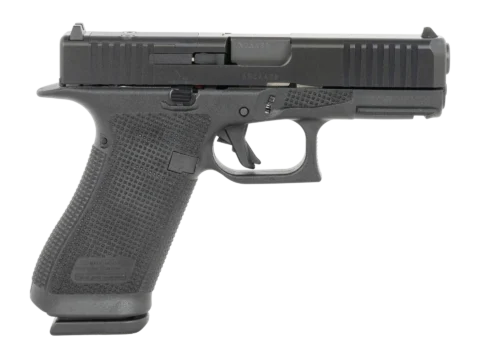
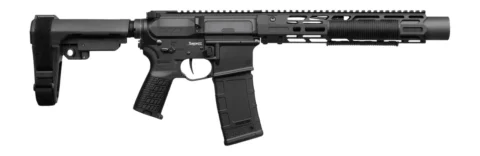
CMMG 30A0ED0-AB Zeroed Banshee Mk4 300 Blackout 30+1 6.50″ Black
CMMG 30A0ED0-AB Zeroed Banshee Mk4 300 Blackout 30+1 6.50" Black Nitride Threaded Barrel, Black Armor Cerakote…