
Do You Really Need a Laser Sight on a Handgun
The decision to equip your handgun with a laser sight often comes down to personal preference and intended use. While some shooters might view it as an unnecessary addition, others consider it an essential tool for improving accuracy, confidence, and situational awareness. Understanding whether you truly need a laser sight requires examining both your shooting habits and the specific advantages that laser sights provide.
Laser sights can be particularly beneficial in situations where rapid target acquisition is critical. For self-defense purposes, the ability to quickly align the laser dot with your target may save precious time in high-stress scenarios. Unlike traditional iron sights that require careful alignment of the front and rear sights, a laser sight allows you to focus on your target while aligning your shot simultaneously. This makes aiming more intuitive, especially in low-light conditions where visibility is limited.
Another critical factor to consider is your level of experience as a shooter. Beginners often find laser sights helpful when learning proper shooting techniques because they offer immediate feedback on aiming and trigger control. Watching how the dot moves as you pull the trigger can reveal issues such as flinching or improper grip technique. On the other hand, experienced shooters may use laser sights not just for training but also for enhancing performance in tactical or self-defense applications.
Despite their benefits, it’s worth noting that lasers are not without limitations. Relying solely on them without practicing proper fundamentals could create bad habits over time. Furthermore, lasers are battery-powered devices that require regular maintenance—such as recharging or replacing batteries—to ensure they work when needed most. Like any tool or accessory, they should complement traditional marksmanship skills rather than replace them entirely.
For recreational shooters or those focused primarily on range practice during daylight hours, laser sights may not be essential since lighting conditions are generally ideal for using iron sights or optics like red dots. However, if you frequently shoot in dimly lit environments or prioritize home defense scenarios, they can be a game-changer by improving visibility and precision under challenging conditions.
Ultimately, whether you “really need” a laser sight depends on how you intend to use your handgun and what type of shooting experience you’re looking for. Carefully evaluating your goals will help determine if this accessory aligns with your needs—or if your current setup already serves its purpose effectively without added technology.
Red vs Green Laser Sights Explained
When it comes to handgun laser sights, one of the most common decisions you’ll face is choosing between red and green lasers. Both options have their unique advantages, and the choice largely depends on your specific needs and shooting environment. Understanding how they differ in terms of visibility, performance, and practicality can help guide your decision.
Visibility in Different Conditions
One of the primary distinctions between red and green laser sights is their visibility under varying light conditions. Red lasers have been around longer and are widely recognized for their reliability. They work well in low-light or indoor settings, where there isn’t significant ambient lighting to obscure the beam. However, they can be harder to see in bright daylight due to their lower wavelength intensity.
On the other hand, green lasers are more visible in daylight conditions because our eyes are naturally more sensitive to green light. The brightness of a green laser makes it an excellent choice for outdoor shooting or daylight scenarios where quick target acquisition is crucial. This enhanced visibility can make all the difference when fractions of a second matter.
Energy Efficiency
Red lasers tend to be more energy-efficient than their green counterparts. They require less power to operate, which means longer battery life for your sighting system. For those who prioritize extended use without frequent battery changes, red lasers might be the better option.
Green lasers, while offering superior brightness, consume more energy due to their complex construction process that involves converting infrared light into visible green light. As a result, you might find yourself replacing batteries more often with a green laser sight.
Temperature Performance
Environmental factors such as temperature can also impact your choice between red and green lasers. Red lasers are known for performing consistently across a wide range of temperatures, making them reliable in extremely cold or hot conditions.
Green lasers, while brighter under normal circumstances, can sometimes falter in extreme cold temperatures as the internal components may not function optimally. If you frequently shoot in harsh weather conditions or rely on your firearm for outdoor activities like hunting during winter months, this is an important consideration.
Cost Differences
Another factor to weigh is cost. Red laser sights are generally more affordable than green ones due to simpler manufacturing processes and lower production costs. Green laser sights often come at a premium price point because of their advanced technology and increased visibility benefits.
Choosing What Works for You
The decision between red and green lasers ultimately boils down to how you use your firearm and what environment you’re operating in most frequently. If affordability and battery efficiency matter most—or if your shooting occurs mainly indoors—a red laser could be just what you need. Conversely, if daylight visibility or rapid target acquisition outdoors takes priority, investing in a high-quality green laser may be worth it despite its higher cost and shorter battery life.
Understanding these differences ensures that you select the right tool tailored to your specific needs rather than relying on general recommendations alone.
Red vs Green Laser Sights Explained
When it comes to handgun laser sights, one of the most common questions revolves around the choice between red and green lasers. Each has distinct advantages and practical applications, making the decision largely dependent on individual preferences and usage scenarios. Understanding the differences can help you make an informed choice for your specific needs.
Visibility in Different Lighting Conditions
The primary distinction between red and green laser sights lies in their visibility under varying light conditions. Red lasers, being the more traditional option, are highly effective in low-light or indoor environments. They produce a crisp beam that works well at shorter ranges and is less likely to overwhelm your vision.
On the other hand, green lasers shine—quite literally—in daylight or brighter settings where red lasers might falter. The human eye perceives green wavelengths more easily than red ones, meaning a green laser will appear brighter and more visible on sunny days or in well-lit areas. If you anticipate shooting outdoors during daytime hours, a green laser may provide better performance.
Power Consumption
Another key consideration is battery efficiency. Red lasers generally consume less power compared to their green counterparts, offering longer battery life between charges or replacements. This makes them a cost-effective option for those who prioritize longevity over maximum brightness.
Green lasers require more energy due to their complex design and higher wavelength output. While they deliver enhanced visibility, this comes at the expense of faster battery depletion. Users must weigh whether increased brightness justifies more frequent maintenance.
Temperature Sensitivity
Temperature sensitivity is another factor to keep in mind when deciding between red and green laser sights. Green lasers are often more prone to performance issues in extreme cold temperatures. For shooters who may use their firearms outdoors in winter conditions or colder climates, this could be a potential drawback of choosing a green laser sight.
Red lasers perform reliably across a broader range of temperatures, making them suitable for rugged environments and all-weather use without compromising functionality.
Cost Differences
Generally speaking, red lasers are more affordable than green ones due to simpler manufacturing processes and lower power requirements. If budget constraints play a role in your decision-making process, red may be the right fit without sacrificing essential functionality.
For those willing to invest extra money into enhanced visibility or who require optimal brightness for specific circumstances (like personal defense during bright daylight), the higher cost of green lasers might be justified.
Practical Applications
Red laser sights work exceptionally well for indoor ranges, home defense scenarios at night, or concealed carry situations where compactness and efficiency matter most. Green lasers excel for outdoor shooting enthusiasts, law enforcement officers operating during daylight hours, or competitive shooters aiming for rapid target acquisition under varied lighting conditions.
Ultimately, neither option is definitively better; it’s about finding what aligns with your environment and needs as a shooter.
Best Laser Sight Features for Accuracy and Visibility
Laser sights have become a popular choice among handgun users due to their ability to enhance accuracy and target acquisition. However, not all laser sights are created equal. Understanding the features that contribute to accuracy and visibility can help you make an informed decision when selecting one for your firearm.
One of the key factors in improving accuracy with a laser sight is its beam intensity and clarity. A high-quality laser offers a sharp, consistent dot that remains easy to see even under varying lighting conditions. Look for models that maintain a balanced beam intensity — bright enough to be visible in daylight but not so overpowering that it creates glare in low-light settings. Green lasers are often favored for their superior visibility during the day, as human eyes are more sensitive to green light than red. However, red lasers may perform adequately indoors or in dim conditions while offering longer battery life.
Adjustability is another critical feature to consider when seeking greater precision. Laser sights with windage and elevation adjustment capabilities allow you to fine-tune the point of aim, ensuring the laser aligns perfectly with your firearm’s trajectory at typical shooting distances. This customization ensures consistent results across different shooting scenarios.
Visibility also depends on the laser’s resistance to environmental factors such as fog, rain, or dust. Premium laser sights often include coatings or housing designs that protect against these elements, ensuring the beam remains effective regardless of outdoor conditions.
Another important aspect is how well the laser integrates with additional sighting tools like iron sights or optical red dots. Co-witnessing options add versatility, allowing you to rely on multiple systems simultaneously without obstructing your view.
Lastly, ease of activation plays an underrated role in achieving both accuracy and visibility during a high-pressure situation. Switch placement should be intuitive so that engaging the laser becomes second nature without disrupting your grip on the handgun. Ambidextrous controls or pressure-activated panels offer practical solutions for shooters of all skill levels.
Selecting a laser sight tailored around these features will ultimately result in better performance, greater confidence at the range or in defensive situations, and improved overall shooting proficiency regardless of experience level.
Laser Sights vs Iron Sights and Red Dots
Understanding the differences between laser sights, traditional iron sights, and modern red dot optics is essential when deciding which option best suits your shooting needs. Each offers unique benefits and drawbacks, depending on factors like shooting conditions, experience level, and personal preferences.
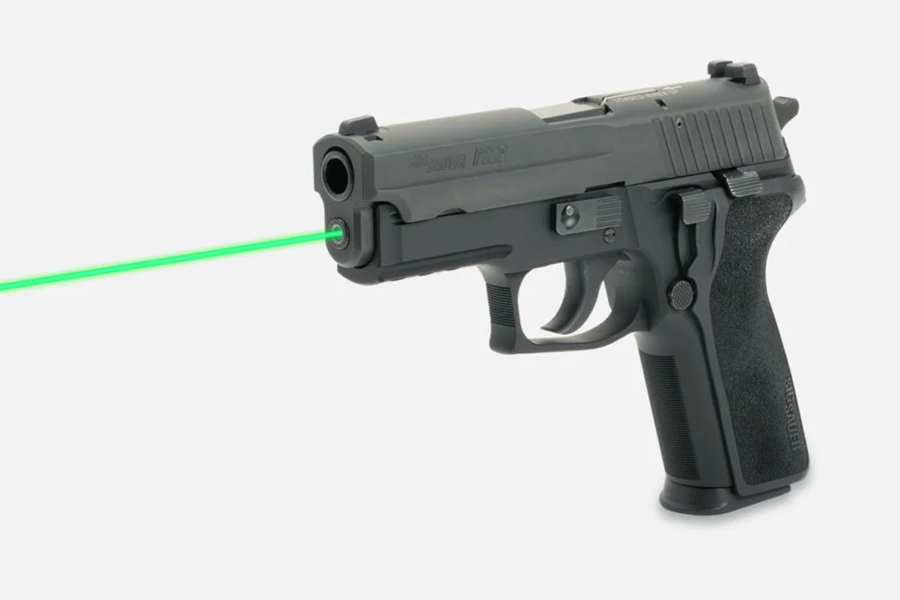
Laser sights are favored by many shooters for their ability to provide rapid target acquisition in low-light or high-stress situations. Unlike iron sights or red dot systems that require proper alignment of the sight with your eye and the target, a laser projects a visible beam directly onto the point of impact. This feature eliminates the need for precise alignment, making it particularly useful for defensive shooting scenarios where speed is critical. Additionally, lasers can assist those with limited vision or reduced ability to focus on traditional sighting systems.
Iron sights, on the other hand, are a time-tested option that has been standard on firearms for centuries. These fixed or adjustable metal notches demand more practice to master but offer simplicity and reliability. They don’t rely on any power source or electronics and are virtually indestructible under normal use. For shooters who prefer minimalism or want to develop foundational skills in marksmanship, iron sights remain a solid choice.
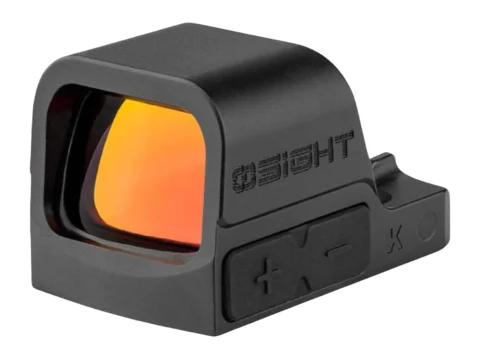
Red dot optics bridge the gap between traditional iron sights and laser systems by providing an illuminated aiming point visible through an optical lens. Unlike lasers which project a beam outward onto your target, red dots display an internal reticle aligned with your point of aim. These systems are highly effective for mid-range shooting applications like competition or hunting but can be less practical in certain defensive situations due to their slightly slower acquisition speed compared to lasers.
One key difference between these options lies in their visibility under various lighting conditions. Laser sights perform exceptionally well in low-light settings but may struggle in bright daylight unless equipped with powerful green lasers (which tend to be more visible than red ones). Red dots typically fare better across diverse lighting environments but require consistent battery management to remain effective. Iron sights excel in all lighting conditions since they depend solely on ambient light rather than electronics.
The choice between these systems often comes down to individual preference and intended use cases. For concealed carry or home defense situations where close-quarters engagements dominate, a laser sight offers significant advantages in speed and simplicity under stress. Shooters looking for versatility across multiple ranges may lean toward red dot optics as a balanced option offering precision without sacrificing usability at distance. Meanwhile, those prioritizing reliability above all else might opt for traditional irons as their go-to solution.
Ultimately, integrating laser sights into your handgun setup doesn’t have to mean discarding other sighting methods entirely—many modern handguns allow you to co-witness laser systems alongside iron sights or red dots for maximum flexibility across different scenarios.
Who Benefits Most from Using a Handgun Laser
Handgun laser sights have gained significant popularity among shooters of all skill levels, but not every gun owner may fully understand who stands to benefit most from incorporating this technology. While lasers are a valuable tool for many, their unique advantages cater particularly well to certain groups of users. This section explores who gains the most from using handgun laser sights and why they are such an important addition to specific shooting scenarios.
New Gun Owners Learning Proper Aim
For new firearm owners, mastering proper aiming techniques can be challenging. Handgun laser sights simplify the learning process by providing visual feedback on where the muzzle is pointing. Unlike traditional iron sights, which require alignment and consistent practice to master, lasers give immediate confirmation of targeting accuracy. Beginning shooters often feel more confident when they can see exactly where their shots will land before pulling the trigger.
By reducing the steep learning curve associated with aiming, these devices help newcomers develop safer and more competent shooting habits early on. The added confidence can encourage consistent practice rather than frustration.
Home-Defense Users in Low-Light Conditions
Individuals who rely on handguns for home defense often find themselves operating in less-than-ideal lighting conditions. Whether it’s a dimly lit hallway or complete darkness, being able to clearly identify targets is critical for both safety and accuracy. A laser sight enhances visibility in low light without requiring additional accessories such as flashlights that could reveal your position prematurely.
Home-defense users benefit greatly from laser sights due to their ability to quickly acquire targets under pressure—a key requirement during high-stress situations where precision matters most.
People with Limited Vision or Physical Challenges
Shooters with vision impairments or physical limitations also find significant value in handgun lasers. For individuals who struggle with squinting through iron sights or aligning rear and front sight posts due to reduced eyesight, a projected beam simplifies aiming dramatically. Similarly, those with mobility issues or limited dexterity may find it easier to engage a target using a laser sight because it reduces the need for precise hand-eye coordination.
This accessibility makes firearms use more inclusive while ensuring that people with specific needs can still confidently and safely operate their handguns.
Law Enforcement and Tactical Professionals
While handgun lasers aren’t exclusively used by civilians, law enforcement officers and tactical professionals also gain considerable advantages from integrating them into their daily tools. In high-stakes environments where seconds matter, lasers allow rapid target acquisition without needing extended time to align traditional sights.
Additionally, professionals engaged in crowd control or hostage situations appreciate how visible laser beams serve as deterrents. The mere presence of a bright red or green dot placed on an individual can de-escalate potentially volatile encounters without requiring immediate force.
Concealed Carry Practitioners
Concealed carry permit holders tend to prioritize quick reaction times paired with reliable accuracy under unpredictable circumstances. A handgun laser is a practical solution for these individuals because it assists in making fast yet focused decisions during emergencies.
In split-second scenarios—such as defending oneself against an attacker—there may not be time for perfect sight alignment using irons or even red dots. Lasers ensure that concealed carriers remain prepared while increasing efficiency in defensive shooting contexts.
Competitive Shooters Seeking an Edge
Although not every competition allows laser-equipped handguns, certain advanced divisions welcome them as part of modernized setups. Competitive shooters seeking faster transitions between targets appreciate how lasers enhance speed without sacrificing precision during high-paced events.
In summary, anyone looking to improve their accuracy under stress, compensate for physical challenges, or maximize efficiency during critical moments stands to gain significantly from equipping a handgun with a reliable laser sight tailored specifically for their needs.