
Differences Between .308 Winchester and 7.62×51 NATO
The .308 Winchester and the 7.62×51 NATO cartridges are often considered interchangeable by some shooters, but there are important differences that set them apart. Understanding these distinctions is crucial for both safety and performance when using your rifle.
The .308 Winchester was developed as a commercial sporting round in the 1950s and has since become one of the most versatile cartridges for hunting, target shooting, and long-range precision shooting. On the other hand, the 7.62×51 NATO was designed as a military round during the same period to serve as a standard issue rifle cartridge for NATO forces.
From a dimensional standpoint, both cartridges share similar external specifications; however, they differ slightly in chamber pressure ratings and case design standards. The .308 Winchester typically operates at slightly higher pressures compared to its military counterpart. This difference in pressure can make firing commercial .308 loads out of a rifle chambered specifically for 7.62×51 unsafe in certain situations due to potential overpressure concerns.
Another key distinction lies in case thickness and internal capacity. Military-grade 7.62×51 NATO brass generally has thicker walls compared to commercial .308 cases. While this increases durability under adverse conditions, it also slightly reduces internal case volume, which can affect powder capacity and ultimately velocity performance.
Headspacing is another critical factor that separates these two cartridges. The military specification for 7.62×51 NATO allows for greater headspace tolerances than what is typically found with chambers designed specifically for .308 Winchester rifles. In practice, this means that while many rifles can safely fire both rounds interchangeably, it’s always best to consult your firearm manufacturer’s recommendations before mixing ammunition types.
When it comes to accuracy considerations, precision shooters often lean toward .308 Winchester due to its tighter manufacturing tolerances and larger selection of high-quality factory loads tailored specifically for competition or long-range applications. Conversely, surplus or mass-produced 7.62×51 ammo may sometimes exhibit looser consistency standards, making it more suitable for plinking or training purposes rather than precision work.
Ultimately, the choice between these two cartridges depends on your intended use case and firearm setup. If you own a modern bolt-action rifle designed for high-performance shooting or hunting, you may find better results sticking with commercial-grade .308 ammunition that offers consistent ballistics tailored to your needs. However, if you’re running an older battle rifle like an M1A or FAL chambered explicitly for 7.62×51 NATO ammo—or simply looking for affordable options—military surplus options might serve you well while keeping costs manageable.
Understanding these technical differences ensures safer practices at the range while optimizing performance based on your goals—whether you’re hunting big game in rugged terrain or enjoying an extended session at the target range with friends.
Differences Between .308 Winchester and 7.62×51 NATO
Understanding the differences between .308 Winchester and 7.62×51 NATO is crucial for anyone interested in optimizing their shooting performance, whether in hunting, target shooting, or plinking. While these two cartridges are often used interchangeably due to their similar dimensions, there are important distinctions that shooters need to know.
The most significant difference lies in the pressure levels at which the cartridges operate. The .308 Winchester is a commercial cartridge designed to handle slightly higher chamber pressures than its military counterpart, the 7.62×51 NATO. Specifically, SAAMI (Sporting Arms and Ammunition Manufacturers’ Institute) sets the maximum pressure for .308 Winchester at around 62,000 psi, whereas 7.62×51 NATO typically operates at approximately 50,000 psi according to CIP (Permanent International Commission for Firearms Testing) standards. This means that firearms chambered specifically for .308 Winchester are built to handle more intense pressures than those designed solely for 7.62×51 NATO.
Another key distinction relates to headspace tolerances and brass case thickness. Military-grade 7.62×51 NATO ammunition often features thicker brass casings compared to commercial .308 Winchester rounds. This added thickness is designed for reliability under harsh battlefield conditions but results in slightly reduced internal case capacity, which can influence velocity and pressure when reloading or firing.
Headspace differences also play a role in compatibility and safety considerations between the two rounds. Tolerances for military rifles chambered in 7.62×51 NATO tend to be more generous than those of civilian rifles chambered in .308 Winchester. While many rifles can safely fire both cartridges interchangeably, it’s always recommended to verify your firearm specifications before mixing ammunition types.
Accuracy can also differ slightly between the two rounds due to variances in manufacturing standards and bullet design—although this difference is generally negligible for casual shooters or hunters operating within standard ranges.
Despite their differences, there’s a significant overlap between these cartridges when it comes to practical use cases such as hunting or target practice. However, understanding these nuances is essential when selecting ammunition or reloading components tailored specifically for your rifle setup.
When purchasing either .308 Winchester or 7.62×51 NATO ammunition, be sure to consider what your firearm was designed for as well as any markings on your rifle’s barrel indicating chamber specifications (e.g., “ONLY USE .308 WIN” or “.762×51”). Misusing incompatible ammo could lead to excessive wear on your firearm—or worse yet—catastrophic failure during operation.
By recognizing how these two calibers differ not just mechanically but also functionally within specific shooting contexts, you can make informed decisions tailored toward safety and performance without sacrificing accuracy or reliability during your next range day or hunting trip.
Reliable Budget Options for High-Volume Shooting
Finding affordable and reliable ammunition is essential for shooters who engage in high-volume activities like plinking or extended range sessions. When shooting hundreds of rounds in a single outing, the cost of ammunition can quickly add up. Choosing budget-friendly options doesn’t mean sacrificing reliability or consistency, but it does require understanding which manufacturers and load types offer the best balance of price and performance.
One of the most important considerations when selecting budget-friendly .308 Winchester or 7.62×51 NATO ammo is quality control. Many reputable manufacturers produce bulk ammunition specifically designed to provide consistent performance at a lower price point. Brands such as Wolf, PMC Bronze, and Sellier & Bellot are well-known for offering inexpensive yet reliable options that perform adequately for casual shooting and training exercises. While these loads may not match the precision of premium hunting or match-grade rounds, they are more than sufficient for general plinking purposes.
Another factor to consider is whether to opt for steel-cased or brass-cased ammunition. Steel-cased ammo is often the most cost-effective choice due to its lower production costs, but it can be harder on your rifle’s extractor over time and isn’t always reloadable. Brass-cased ammo, while slightly more expensive, tends to run cleaner and offers reloadability for shooters who want to save even more by reusing their spent casings. For high-volume shooting on a budget, evaluating your maintenance capabilities and long-term needs will help you decide which type works best with your rifle setup.
Reloaded or remanufactured ammunition is another option worth exploring if you’re looking to save money without compromising too much on quality. Companies like Federal American Eagle or Freedom Munitions specialize in producing remanufactured rounds that perform well in semi-automatic rifles while staying within an affordable price range. However, it’s important to purchase from trusted brands with strict quality standards to avoid potential issues with cycling reliability or case durability.
Lastly, when purchasing budget ammunition in bulk quantities, it’s crucial to test a small sample before committing to hundreds (or thousands) of rounds from a single manufacturer or lot number. Variability across production runs can occasionally result in inconsistencies affecting accuracy or feeding reliability in some firearms.
By prioritizing quality control even when selecting budget-friendly options, you’ll ensure that your high-volume shooting sessions remain enjoyable without putting unnecessary wear on your equipment—or straining your wallet too much at each trip to the range.
Premium Hunting Loads for Big Game Performance
When it comes to hunting large game such as elk, moose, or bear, selecting the right ammunition is crucial. For hunters using .308 Winchester or 7.62×51 NATO rifles, premium hunting loads are designed to deliver exceptional performance in terms of penetration, expansion, and retained energy. These factors play a vital role in creating ethical and efficient kills by ensuring the rounds hit with sufficient power and precision.
Controlled Expansion for Stopping Power
Premium hunting loads often feature bullets engineered for controlled expansion upon impact. This means that when the round strikes the animal, it expands in a predictable manner to create a larger wound channel. Controlled expansion prevents over-penetration while maximizing energy transfer into the target—critical for taking down big game cleanly. Popular designs include polymer-tipped bullets like Nosler AccuBond or Hornady SST, which initiate expansion quickly yet maintain structural integrity for deep penetration.
Bonded Bullets and Monolithic Options
For hunters targeting tough and thick-skinned animals, bonded bullets or monolithic copper designs are particularly effective. Bonded bullets like Federal Premium Trophy Bonded Tip ensure that the core of the bullet remains fused to its jacket during impact, preventing fragmentation and maintaining weight retention. Similarly, monolithic options such as Barnes TTSX (Triple-Shock X) deliver unparalleled penetration by combining expansion with a solid copper construction that won’t break apart.
Considerations for Terminal Ballistics
A successful hunt depends on understanding terminal ballistics—the behavior of your ammunition when it hits its target. With big game hunting loads in .308 Winchester and 7.62×51 NATO calibers, choosing heavier grain weights between 165 to 180 grains offers better momentum and deeper penetration required for larger animals. Heavier bullets also perform better at longer ranges due to their ability to resist wind drift and retain kinetic energy over distance.
Environmental Factors and Game-Specific Choices
The terrain you’re hunting in can influence your choice of premium ammo. If you’re hunting in dense woods where shots are typically closer range, rounds optimized for rapid expansion might be preferable to ensure quick knockdown power without over-penetrating through brush or foliage. On the other hand, if you’re pursuing big game across open plains where longer shots are common, high ballistic coefficient (BC) projectiles such as Hornady ELD-X or Berger VLD Hunting provide flatter trajectories and reliable performance at extended distances.
Practice Before You Hunt
Even with high-quality hunting ammunition, familiarizing yourself with your rifle’s performance is essential before heading into the field. Variations between brands can result in subtle differences in accuracy and point of impact due to differing powder charges or bullet designs. Regular practice sessions allow you to fine-tune your zeroing process based on your chosen load while building confidence in handling your rifle under field conditions.
Investing in premium hunting loads ensures you maximize both ballistic efficiency and ethical considerations while pursuing big game animals with .308 Winchester or 7.62×51 NATO calibers. A carefully selected round tailored to your environment, rifle setup, and target species makes all the difference when it matters most on a hunt—and provides peace of mind knowing you’re equipped with reliable performance capabilities suited for even the most demanding conditions.
Accuracy, Grain Weight, and Ballistic Considerations
When selecting the right .308 Winchester or 7.62×51 NATO ammunition, understanding accuracy, grain weight, and ballistic performance is essential. These factors directly influence not only the precision of your shots but also how effectively your rounds achieve their purpose—whether it’s target shooting, hunting, or home defense. A careful evaluation of these elements ensures you get the best performance from your firearm.
Grain Weight and Its Impact on Performance
Grain weight refers to the mass of the bullet itself and is a critical factor when considering how a round will behave upon firing. In .308 Winchester and 7.62×51 NATO cartridges, grain weights typically range from 110 to 180 grains or more. Lighter bullets (110-150 grains) are often preferred for target shooting and varmint hunting due to their flatter trajectories at shorter distances. Heavier bullets (168-180 grains), on the other hand, are ideal for long-range shooting or hunting larger game as they provide greater energy retention and deeper penetration.
For competitive shooters aiming for pinpoint accuracy in calm weather conditions, something like a 168-grain match-grade Hollow Point Boat Tail (HPBT) can be an excellent choice. If high winds or environmental factors are present, opting for heavier projectiles with higher ballistic coefficients (BC) will improve stability over long distances.
Ballistics: Understanding Trajectory and Energy Transfer
Ballistic performance encompasses how a bullet flies through the air and its behavior upon impact. The term “ballistic coefficient” describes how efficiently a projectile cuts through air resistance; higher BC values indicate better aerodynamics and improved velocity retention at longer ranges. For instance, many hunters favor high-BC bullets because they maintain energy over extended distances—a critical factor when taking ethical shots on big game like elk or moose.
Velocity plays another important role in ballistics. High-speed rounds tend to have flatter trajectories but may lose effectiveness faster once they exceed their optimal range due to increased drag forces acting against them. Balancing speed with energy transfer is key if you’re looking for consistent results across varying applications.
Matching Ammo to Your Rifle Twist Rate
Your rifle’s barrel twist rate also determines which bullet weights will achieve maximum accuracy. Twist rate refers to how much spin is imparted on a bullet as it travels down the barrel; slower twist rates work best with lighter projectiles while faster rates are suited for heavier bullets that require more stabilization in flight.
For example: – A common 1:10 twist rate handles most .308 loads between 168-180 grains effectively. – A faster twist rate might be necessary when pushing toward ultra-heavy subsonic loads.
Before committing to specific ammunition types in bulk, experiment with smaller quantities across different brands within your chosen grain weight range to see what groups best with your particular setup.
Final Thoughts on Accuracy Optimization
Fine-tuning accuracy involves more than just selecting ammo with promising specifications—it’s about matching that ammo perfectly to your rifle’s characteristics while factoring in external variables like environment and intended use case. Whether you’re punching paper targets at the range or pursuing game deep in wooded terrain, having a solid grasp of grain weight dynamics alongside ballistic nuances ensures each shot counts where it matters most.
How to Choose the Right Load for Your Rifle Setup
Selecting the right ammunition for your rifle setup is critical to optimizing performance, whether you’re using it for hunting, target shooting, or general range practice. The choice of load involves considering multiple factors such as barrel length, rifling twist rate, intended use, and personal preferences. Understanding how these elements interact with bullet weight, velocity, and construction allows shooters to make informed decisions tailored to their specific firearm and shooting goals.
A primary consideration in choosing a load is understanding your rifle’s rifling twist rate. Twist rates determine how well a particular grain weight will stabilize when fired. For example, a .308 Winchester rifle with a 1:10 twist rate will stabilize heavier bullets—generally those above 175 grains—better than lighter projectiles. On the other hand, rifles with slower twist rates like 1:12 are more suited to lightweight bullets in the 147-155 grain range. Knowing your twist rate can help immediately eliminate loads that may not perform optimally in your firearm.
Barrel length also plays an essential role when selecting ammunition. Shorter barrels—often found on compact bolt-action rifles or tactical setups—tend to generate lower muzzle velocities due to reduced powder burn time within the chamber. In these cases, loads with faster-burning powder or lighter projectiles may perform more efficiently compared to heavy bullets that rely on higher velocities for optimal ballistic performance.
Your intended use should always guide ammunition selection as well. For hunting medium or large game such as deer or elk, bonded or solid copper loads designed for controlled expansion and deep penetration are ideal. Options like Federal Premium Trophy Bonded Tip or Hornady ELD-X excel in such scenarios by combining expanding tips with heavy-jacketed designs to ensure energy transfer without compromising terminal performance.
For target shooting and competition use where precision matters most, match-grade ammo featuring uniform powder charges and perfectly seated projectiles is essential. These rounds often feature heavier grain weights (168-175 grains) that align with common competition standards while delivering consistent accuracy at long distances.
Finally, budget is another practical factor when choosing ammo for your rifle setup. While advanced bonded hunting bullets or match-grade cartridges deliver exceptional results for specialized tasks, they are typically not cost-effective for high-volume shooting sessions at the range. Instead, opting for reliable yet affordable full metal jacket rounds from brands like Winchester White Box or PMC Bronze ensures you’ll get plenty of practice without breaking the bank.
Ultimately, experimentation is key when choosing the right load for your rifle setup. Testing different brands and bullet weights allows you to find what combination works best in terms of accuracy and overall feel while considering practical factors like cost and availability of ammunition in your area. Regular cleaning after testing various loads also helps maintain consistency by minimizing fouling-related performance issues over time.

YANKEE HILL MACHINE COMPANY 3-LUG HEAVY DUTY ADAPTER .45
YANKEE HILL MACHINE COMPANY 3-LUG HEAVY DUTY ADAPTER .45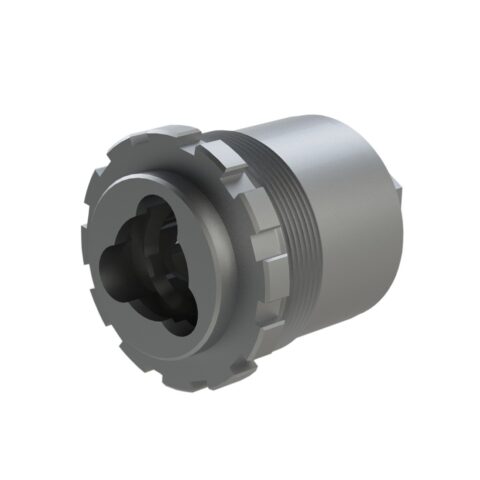
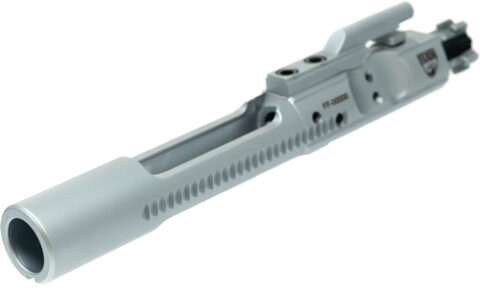
FAXON 5.56 M16 SUPERFINISHED – BOLT CARRIER GROUP CHROME
FAXON 5.56 M16 SUPERFINISHED - BOLT CARRIER GROUP CHROME