
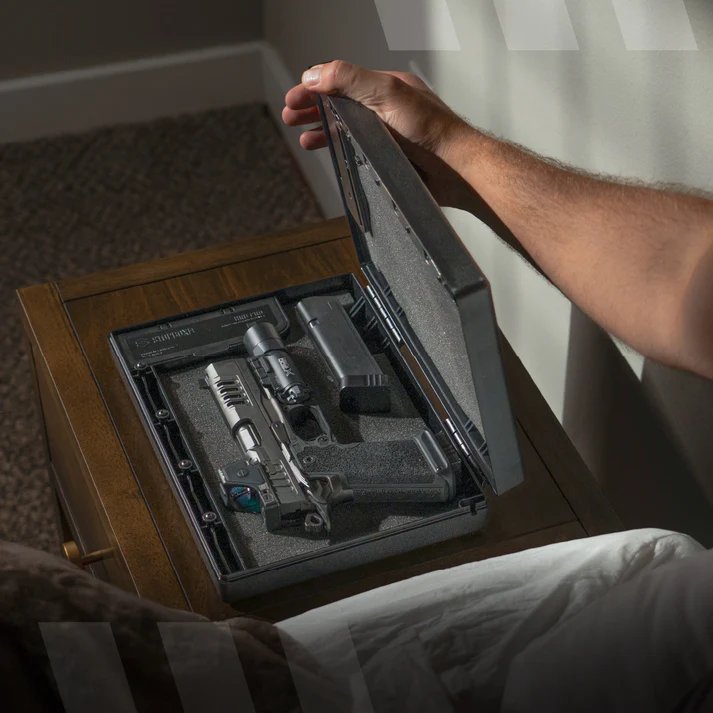
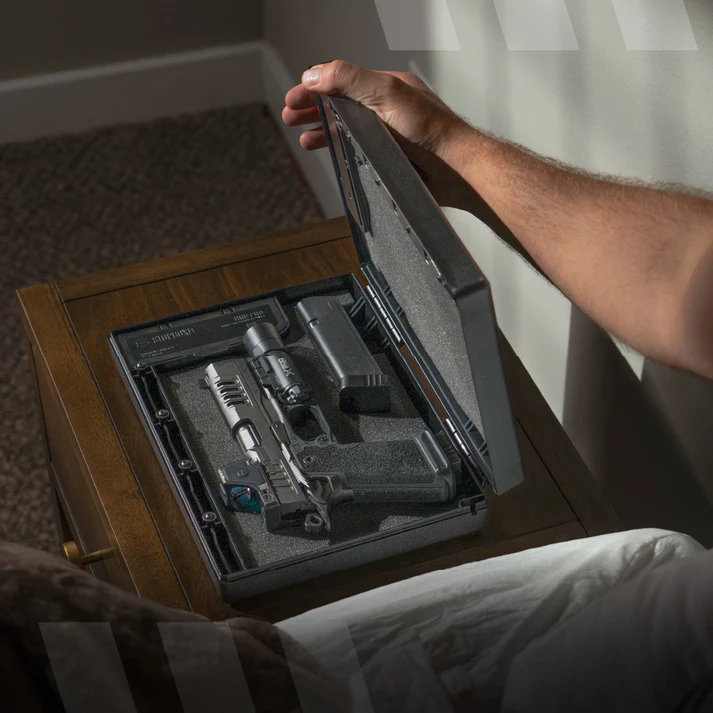
The StopBox is not a gun safe in the traditional sense, and understanding that distinction early will save you from buying the wrong product. It is a portable, mechanical hand-gesture retention device designed to keep a handgun instantly accessible to you while blocking access from children, guests, or anyone who has not practiced your specific four-move combination. This review examines the StopBox Pro in detail: how the gesture lock works, where it excels, where security tradeoffs appear, and how it stacks up against competitors like the VAULTEK LifePod 20 and budget alternatives. If you are a US firearm owner weighing portable storage options in 2026, this buyer’s guide will help you decide whether the $169 price tag makes sense for your specific situation.
What Is the StopBox? Understanding the Mechanical Hand-Gesture Lock
The StopBox is manufactured in Spokane Valley, Washington, and the company claims over 675,000 customers across its product line. The flagship model, the StopBox Pro, is a clamshell-style case built from impact-resistant polymer with a foam interior that cradles a single handgun. The lid is secured by a rotating mechanical dial mechanism that accepts a user-programmed gesture code: a sequence of four directional movements that you enter with your thumb or fingers in one fluid motion.
The product ecosystem has expanded beyond the original handgun box. The current lineup includes the StopBox Pro for handguns, the StopBox U-CAN for general utility storage, a wall-mounted version for fixed installation, and the Chamber Lock Pro designed specifically for rifles. Pricing varies by channel: the official StopBoxUSA.com site lists the Pro at $169, while Amazon shows $209 for the same unit. The direct-from-manufacturer price is the better deal, and seasonal promotions often sweeten it further.
How the StopBox Works: The Gesture Code System Explained
Setup takes about two minutes. You open the box using the factory default combination, then follow the instructions to program your personal four-movement sequence using the mechanical dial. The movements are directional: up, down, left, right, in any order you choose. Once set, the code is locked into the mechanism without any electronic memory, circuit board, or battery. To open the box, you perform the same four-move gesture in the correct sequence, and the lid releases. A practiced user can complete the gesture in well under two seconds.The no-battery design is the StopBox’s defining reliability advantage. Electronic safes with biometric sensors or digital keypads can fail when batteries die, circuits corrode, or sensors refuse to read a fingerprint. The StopBox has none of those failure points. It works the same way at zero degrees as it does at ninety. The tradeoff is precision: the mechanical dial requires deliberate, accurate movements. There is no forgiveness for a sloppy gesture the way a digital keypad might accept a slightly mis-typed code. The learning curve is real but short; most users report developing reliable muscle memory within a few days of consistent practice. Closing the lid automatically re-engages the lock, so there is no separate step to secure the firearm after returning it to the case.
StopBox vs. Traditional Gun Safes: Key Differences
Portability and Instant Access
The StopBox Pro weighs under two pounds, making it dramatically lighter than steel cable-lock boxes that run three to five pounds and biometric safes that can tip the scales at five to fifteen pounds. That weight difference matters when you are moving the box between a nightstand, a vehicle center console, a range bag, or luggage for air travel. A traditional safe with a combination dial, key lock, or biometric scanner adds seconds to access, and those seconds feel longer in the dark or under stress. The StopBox gesture is a single blind-reachable motion that does not require looking at the device, fumbling for a key, or waiting for a fingerprint sensor to respond.
Security Tradeoffs: Plastic vs. Steel Construction
The most common criticism of the StopBox, and the one that surfaces in the frequently-asked questions about its disadvantages, is that the polymer case does not permanently secure the firearm against a determined thief with tools and time. This is accurate, and it is also a category misunderstanding. The StopBox is designed as a retention device that prevents grab-and-go access by children or casual visitors. It is not a burglary-rated safe, and StopBox does not market it as one. A steel lock box will resist prying better than polymer, but steel boxes are heavier, bulkier, and often require keys or batteries that introduce their own failure modes. The LockPickingLawyer video on the StopBox, which has accumulated over 591,000 views, demonstrates that the mechanical lock can be bypassed by a skilled attacker using manipulation techniques. That finding deserves honest examination rather than dismissal.
StopBox Security Analysis: What the LockPickingLawyer Video Reveals
The LockPickingLawyer opened the StopBox quickly using a manipulation method that exploits the mechanical tolerances of the gesture dial. The technique requires specific knowledge, practiced hands, and time with the device. In context, this is not a unique vulnerability among consumer gun storage products. Most gun safes priced under $500 can be defeated by a skilled locksmith with the right tools, and many electronic safes have their own well-documented weaknesses: biometric sensors that can be spoofed, backup key locks with keys left in accessible places, and dead batteries that render the safe useless until a manual override is located.
The polymer construction does make physical prying easier than it would be on a steel safe. A crowbar or large screwdriver applied with force will eventually defeat the case. The gesture lock mechanism itself is comparable in principle to mechanical combination locks found on higher-end products, but the housing material is the limiting factor. The realistic threat assessment looks like this: the StopBox is effective against opportunistic access from children, house guests, or someone who finds the box and tries random movements. It is not effective against a burglar with tools, time, and the willingness to destroy the case. For most users, the child-safety and casual-access prevention use cases are the ones that matter day to day.
StopBox vs. Top Competitors (2026 Comparison)
StopBox Pro ($169) vs. VAULTEK LifePod 20 ($169.99)
These two products sit at nearly identical price points but take fundamentally different approaches. The VAULTEK LifePod 20 uses a biometric fingerprint sensor backed by a digital keypad and a physical key override. It requires recharging every three to six months to keep the electronics alive. The LifePod 20 is larger and accommodates items beyond handguns, including tablets and documents, but that extra capacity comes with extra weight. Both products are TSA-approved for airline travel with firearms in checked luggage. The choice between them hinges on whether you trust electronics or mechanics more. The StopBox never needs charging and has no sensor to fail. The VAULTEK offers the convenience of one-touch biometric access for multiple authorized users, which the StopBox cannot match since the gesture code must be taught person-to-person.
StopBox Pro ($169) vs. NIANPU Gun Safe Alternative ($59.49)
The price gap here is substantial. The NIANPU is a budget mechanical lock box with a steel body, foam interior, and a simple key lock. It provides steel-level pry resistance at a fraction of the cost. The tradeoff is access speed: retrieving a key, inserting it, and turning the lock takes longer than the StopBox gesture, and finding a key in the dark or under stress is a genuine challenge. The NIANPU makes sense for a buyer who wants basic lock-box security at the lowest possible price and is willing to accept slower access. The StopBox justifies its premium through the speed and convenience of key-free, battery-free operation. If you keep the box on a nightstand for home defense, the access speed difference is meaningful. If you store the box in a closet and rarely open it, the NIANPU may be the smarter purchase.
Who Should Buy the StopBox? (And Who Should Skip It)
The ideal StopBox owner is a parent who wants a handgun accessible at night but secured against curious children during the day. The gesture lock is intuitive for an adult who has practiced it and effectively opaque to a child who has not. Travelers who fly with a single handgun will appreciate the lightweight, TSA-approved design that does not add bulk to checked luggage. Vehicle owners who keep a firearm in a center console or under a seat get a retention device that is faster than a key lock and more discreet than a steel box.
The StopBox is not the right choice for someone who needs a burglary-rated safe that will protect firearms during a home invasion while the owner is away. It is also not ideal for storing multiple handguns, for owners of large-frame pistols that may not fit the interior dimensions, or for budget shoppers who find $169 hard to justify when a $60 key-lock box exists. The product is frequently marketed as a Father’s Day gift, and that gifting angle makes sense: it is a practical accessory that a gun owner might not buy for themselves but would use daily.
StopBox Pros and Cons (Quick Reference)
Pros:
No batteries, electronics, or keys required, so the lock always works regardless of charge state or temperature. Instant access via a single hand gesture that takes under two seconds with practice. Lightweight and portable enough for travel, vehicle storage, or bedside use. TSA-approved for airline travel with firearms in checked luggage. Made in the USA in Spokane Valley, Washington.
Cons:
Polymer construction is less secure than steel safes against forced entry with tools. The mechanical lock can be bypassed by skilled attackers using manipulation techniques, as demonstrated by the LockPickingLawyer. Limited to one handgun with no long-gun storage except the separate Chamber Lock Pro. Higher price than basic key-lock boxes, which run $50 to $80. The gesture code requires precision; there is no error tolerance like a digital keypad provides.
How to Buy the StopBox: Pricing, Discounts, and Where to Shop
The best price on the StopBox Pro is consistently found on the official website, StopBoxUSA.com, where it sells for $169. Amazon lists the same product at $209, a markup that reflects Amazon’s seller fees rather than any added value. Buying direct saves $40 and often includes access to promotions not available on third-party marketplaces. YouTube reviewers frequently share Buy One Get One Free affiliate codes, and the company runs seasonal sales around Father’s Day, Black Friday, and the winter holidays. The 675,000-customer figure that StopBox promotes is a reasonable trust signal, but lead times and stock levels fluctuate, so check the site for current availability before ordering. If you are browsing for related gear, the Hadar Firearms shop carries additional storage and accessory options worth comparing.
Frequently Asked Questions About the StopBox
Is the StopBox TSA-approved? Yes, it meets TSA requirements for transporting a handgun in checked luggage. You must still follow all TSA rules regarding ammunition storage and magazine separation.
Can the StopBox fit my specific handgun model? Most full-size and compact handguns fit within the interior dimensions of approximately 9.5 by 6.5 by 2.5 inches. Measure your firearm, including any optic or extended magazine, against those dimensions before purchasing. Subcompact pistols fit easily; large-frame competition guns with optics may not.
What happens if I forget my gesture code? There is no electronic reset or app recovery. You must contact StopBox customer service for a mechanical reset procedure, which typically requires proof of purchase and may involve shipping the unit.
Is the StopBox waterproof or fireproof? No. The foam interior provides some water resistance against splashes or condensation, but the case is not rated for submersion or fire exposure.
Does the StopBox come with a warranty? StopBox offers a warranty, but the specific terms and duration are not prominently published on the website. Confirm warranty details at the time of purchase and retain your order confirmation.
Final Verdict: Should You Buy the StopBox in 2026?
The StopBox fills a specific niche and fills it well: ultra-fast, no-power handgun retention for child safety and travel. It is not a replacement for a heavy steel home safe, and it does not pretend to be one. The $169 price is fair for a USA-made product that solves a real problem for parents, travelers, and anyone who keeps a handgun within arm’s reach at night. If instant access and portability are your top priorities, buy it. If you need burglary-rated security or multi-firearm storage, look elsewhere. Match the tool to the task, and the StopBox will do exactly what it promises.

DARK30 THERMAL PTZ 640 CAMERA – 640X480 17MC 5 COLOR
DARK30 THERMAL PTZ 640 CAMERA - 640X480 17MC 5 COLOR PALETTES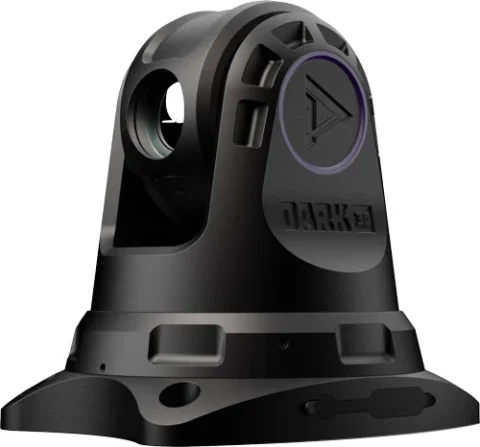
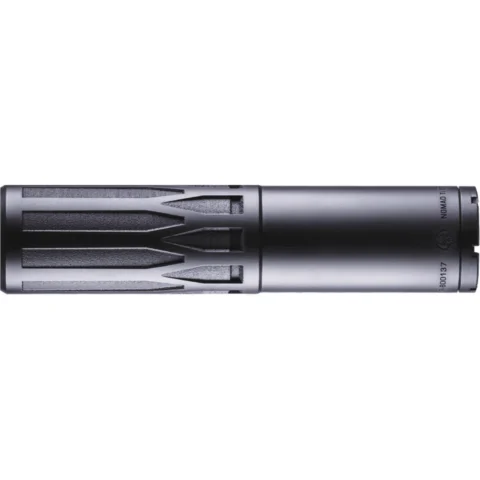
Dead Air Nomad Ti OTB Suppressor 7.62 Black w/ DA870
Dead Air Nomad Ti OTB Suppressor 7.62 Black w/ DA870 5/8-24 Xeno Radial Brake