
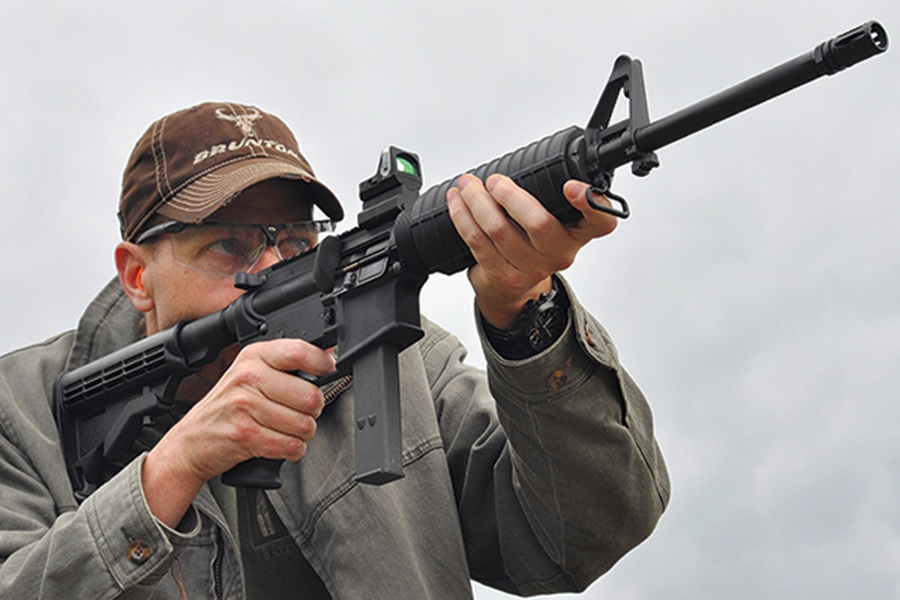
What Is the Colt CAR-15 Platform
The Colt CAR-15 platform is a family of firearms developed by Colt in the 1960s as part of an ambitious effort to create a versatile, modular weapon system. The CAR-15, short for Colt Automatic Rifle-15, was designed as an adaptable solution to meet the varying needs of military forces by offering multiple configurations for different combat scenarios. Unlike traditional rifles or carbines that were typically single-purpose weapons, the CAR-15 platform aimed to consolidate multiple roles into one cohesive system.
At its core, the CAR-15 platform is based on Eugene Stoner’s AR-15 rifle design. It utilizes a direct impingement gas operation system and features lightweight aluminum construction combined with polymer components for durability and reduced weight. The modularity of this design allowed Colt to create a range of configurations suited for specific applications such as close-quarters combat, long-range engagements, and support roles.
Key Characteristics of the CAR-15 Platform:
- Modular Design: The system was built around interchangeable components that could be swapped to meet tactical requirements.
- Examples include shorter barrels for carbines or longer barrels for rifles.
- Different stock options allowed users to adapt the firearm’s length and weight.
- Lightweight Materials: Aluminum alloy receivers and polymer furniture significantly reduced overall weight compared to traditional wood and steel rifles used at the time.
- Gas Operation System: A direct impingement gas system, which redirected gases from fired ammunition back into the action to cycle rounds efficiently.
Intended Purpose
The main goal of developing the CAR-15 platform was to create a weapons family versatile enough to replace numerous specialized firearms in military service. This meant producing variants ranging from compact submachine gun-style models to heavy automatic rifles capable of sustained fire. By standardizing on one base design, logistics could be simplified while manufacturing costs were kept lower.
Civilian Background
Although initially developed for military use during conflicts such as the Vietnam War, civilian interest in AR-style rifles surged in subsequent decades. Due to its modular nature and adaptability, versions derived from the CAR-15 have become popular among sport shooters, hunters, and collectors alike. It’s also worth noting that many of today’s AR-patterned rifles owe their lineage directly to innovations introduced by Colt’s original CAR-15 platform.
Understanding this foundational concept provides important context for exploring how these firearms evolved into their various configurations over time—a topic covered in greater detail under their history and model-specific features within this article series.
History and Evolution of CAR-15 Models
The Colt CAR-15 platform has a fascinating history rooted in innovation, adaptability, and the evolving needs of military and civilian users alike. To understand how it became one of the most versatile firearms platforms in modern history, it’s essential to explore its origins and development over time.
The Birth of the CAR-15
The Colt CAR-15 (short for “Colt Automatic Rifle-15”) emerged in the early 1960s as part of an effort to create a family of lightweight, modular firearms based on Eugene Stoner’s revolutionary AR-15 design. Developed by Colt’s Manufacturing Company following their acquisition of the AR-15 patent, the CAR-15 concept aimed to provide a flexible platform that could fulfill multiple roles for military forces.
Key considerations during its development included:
– Modularity: The ability to swap components for different mission profiles.
– Compactness: A shorter overall length with collapsible stocks for paratroopers and close quarters combat (CQB).
– Reduced weight: Lightweight materials ideal for soldiers requiring mobility.
Early Production Models
One of the first iterations was the CAR-15 Model 609, better known as the XM177E1 or “Commando.” It featured a distinctive short barrel with a moderator (mistakenly called a suppressor) to control muzzle flash and reduce noise. These early models were designed primarily for Special Forces units requiring compact firepower, such as those operating in Vietnam.
Other key developments included:
– XM177E2: An improved version with changes to reliability and barrel length.
– CAR-15 Heavy Assault Rifle: A lesser-known derivative designed for sustained fire but ultimately impractical due to weight concerns.
While certain variants like carbines gained traction, others like survival rifles or belt-fed machine gun adaptations didn’t see widespread use beyond testing phases.
Standardization under M16 Designation
Despite initial enthusiasm surrounding the CAR-15 family, by 1967 most military branches began standardizing around full-length M16-series rifles, simplifying logistics and training. However, shorter-barreled derivatives like the XM177 remained popular among elite units until phased out by more advanced designs later.
Even within this transition process: 1) The modular design philosophy pioneered by Colt continued influencing later developments. 2) Lessons learned from early CAR models informed improvements across broader AR platforms.
The Civilian Impact
In addition to its military success story during this period: – Semi-auto civilian versions derived heavily from commercialized aspects popularized amongst enthusiasts.
Different Variants and Their Key Features
The Colt CAR-15 platform is renowned for its diverse array of variants, each designed with specific use cases in mind. These variations reflect the adaptability of the design and its ability to cater to different operational needs across military, law enforcement, and civilian markets. Below is a closer look at some notable CAR-15 models and the defining features that set them apart.
CAR-15 Commando (XM177 Series)
The CAR-15 Commando is one of the most iconic variants, originally developed for close-quarters combat (CQC) during the Vietnam War.
Key Features:
– Barrel Length: Its signature 10-inch or 11.5-inch barrel enhances maneuverability in confined spaces while sacrificing some range and accuracy compared to standard rifles.
– Flash Suppressor: A distinctive long moderator helps in reducing muzzle flash, which was crucial for jungle warfare where stealth was key.
– Stock Design: Collapsible stock for compact storage and increased portability.
This model became a favorite among special operations forces due to its lightweight design and ease of use in tight environments.
CAR-15 Rifle
The standard rifle-length variant served as a precursor to what would eventually evolve into the M16 series. It was built to meet general infantry requirements.
Key Features:
– 20-Inch Barrel: Provides greater accuracy and effective range compared to shorter-barreled counterparts.
– Full-Sized Stock: Offers added stability during firing, ideal for long engagements or static defensive positions.
Though it saw limited deployment, its DNA carried forward into later designs like the M16A1, showing how integral this variant was to the platform’s development.
CAR-15 Heavy Assault Rifle (HBAR)
This lesser-known variant aimed at fulfilling a squad automatic weapon role within infantry units by integrating heavier components for sustained fire capability.
Key Features:
– Heavy Barrel Profile: Designed to handle higher heat loads during prolonged firing sessions without compromising accuracy or durability.
– Bipod Attachment Points: Enabled better support when firing from prone positions or as part of fixed defenses.
Ultimately, this version had limited success due to competition from dedicated light machine guns like the M60.
XM148 Grenade Launcher Variant
In an effort to increase versatility on the battlefield, Colt experimented with an underbarrel grenade launcher attached directly to certain CAR-15 models.
Key Features:
– Integrated Launcher System: The XM148 allowed soldiers to deliver indirect fire support without needing separate weapon systems. – Compact Design Integration: Maintained much of the platform’s overall maneuverability even with added firepower capability.
While innovative, challenges with reliability meant this configuration wasn’t widely adopted but paved the way for future developments such as the M203 grenade launcher system.
Civilian Sporting Variants
Over time, semi-auto versions of various CAR-15 models were marketed toward civilians under names like “Colt AR” series rifles.
Key Features: – Semi-Automatic Firing: Legal adjustments made compliant with civilian ownership laws in many regions. – Customization Potential: Civilian models often featured adaptability through rail systems for optics and accessories.
These adaptations allowed enthusiasts access to high-quality firearms suitable for sport shooting or personal defense purposes while remaining distinct from their fully automatic counterparts used by military forces.
Each of these variants speaks volumes about Colt’s ability to evolve its designs based on user feedback and changing requirements over decades of service history—something that solidifies its place as a legendary firearm platform appreciated both on battlefields and shooting ranges worldwide.
Military vs Civilian CAR-15 Configurations
The Colt CAR-15 platform has a rich history that spans both military and civilian markets, with each segment receiving its own tailored configurations based on use cases, legal frameworks, and user needs. Understanding the differences between military and civilian versions offers valuable insight into how this firearm evolved to meet diverse demands.
Key Differences Between Military and Civilian Configurations
- Military Models: Designed for combat scenarios, military CAR-15 configurations often feature a fully automatic or burst fire option in addition to semi-automatic fire. This allows for greater versatility during active operations where suppressive fire or rapid engagement is essential.
- Civilian Models: Due to federal regulations like the National Firearms Act (NFA), civilian versions of the CAR-15 are strictly semi-automatic. This limitation makes them compliant with laws governing firearm ownership while still maintaining their appeal for sport shooting, self-defense, or collection purposes.
- Military Models: The need for portability in close-quarters combat led to shorter barrel lengths in certain military configurations, such as the XM177 series (11.5 inches). These compact designs were tailored for jungle warfare during Vietnam or urban environments where maneuverability was critical.
- Civilian Models: While short-barreled rifles (SBRs) are available to civilians with proper licensing under the NFA, most civilian CAR-15s feature longer barrels (16 inches or more) to avoid legal restrictions and optimize ballistic performance for hunting or range shooting.
- Military Models: Military variants often come equipped with specialized attachments such as grenade launchers (M203), bayonet mounts, flash suppressors optimized for night operations, and collapsible stocks designed for rapid adjustments during tactical maneuvers.
- Civilian Models: Civilian owners frequently customize their rifles but are typically limited to non-restricted accessories like optics, bipods, slings, or aftermarket handguards. Suppressors and other advanced tools may require additional permits.
- Military Models: Built to endure harsh conditions including mud, sand, rain, and extreme temperatures encountered in combat zones worldwide.
- Civilian Models: While many aspects of durability remain similar due to shared manufacturing standards at Colt’s facilities, civilian models may not always undergo the same rigorous testing since they are not intended for battlefield deployment.
Overlap Between Military and Civilian Use
Despite their differences: – Both versions share a modular design that enables easy customization using interchangeable parts. – The underlying operating system—a direct impingement gas system—remains consistent across all models. – Both types of CAR-15s owe their design philosophy to lightweight portability combined with reliable performance.
Practical Implications
Whether you’re a collector seeking historical significance or a shooter interested in modern practicality: – Military models offer insight into tactical innovations born out of necessity. – Civilian configurations allow users to experience some of those innovations while adhering to legal guidelines.
Understanding these distinctions not only enhances appreciation for Colt’s engineering but also highlights how firearms can be adapted across environments without compromising reliability or functionality.
Performance and Practical Use Cases
The Colt CAR-15 platform stands out as a highly versatile and performance-driven firearm family. Its various models were designed to meet a range of operational needs, making it effective for both military and civilian applications. Let’s explore the performance characteristics, practical use cases, and why this rifle has been such a reliable tool across its different iterations.
Compact Design for Maneuverability
- Close-Quarter Combat (CQC): The compact size of many CAR-15 models makes them ideal for engaging threats in confined spaces, such as urban combat scenarios or building clearances. Models like the XM177 were specifically tailored for such operations, featuring shorter barrels and collapsible stocks.
- Ease of Transport: The lightweight construction allows the CAR-15 to be carried comfortably over long periods, whether by soldiers in combat zones or civilians venturing into rugged outdoor terrains.
Accuracy Across Distances
One of the primary strengths of the CAR-15 lies in its ability to deliver reliable accuracy across short to medium ranges:
– Shorter Barrels: The shorter barrels found on some variants make them optimal for engagements at ranges under 300 yards while still providing sufficient stopping power.
– Longer Variants: Models with extended barrel configurations allow greater precision at medium-range distances, making them suitable for marksmen or designated sharpshooters within a squad.
Practical Applications in Civilian Use
For civilian firearm enthusiasts or professionals, the CAR-15 offers several practical advantages:
1. Recreational Shooting: Many users appreciate its lightweight design and ease of handling during target practice or sporting competitions.
2. Home Defense: Its compactness and modularity make it an excellent choice for home-defense purposes where maneuverability is crucial.
3. Hunting: Certain models are adaptable enough to be used for hunting small-to-medium game depending on local laws regarding barrel length and ammunition type.
Tactical Versatility Through Modularity
A cornerstone of the CAR-15 platform is its modular design:
– Attachment Compatibility: Users can easily add tactical accessories like optics, foregrips, suppressors, or flashlights based on their specific needs. – Mission-Specific Adaptation: Whether it’s a law enforcement officer requiring a tactical setup or a hunter needing specific sights and grips, the platform offers unparalleled flexibility.
Military Applications – A Proven Track Record
Over decades of use in military theaters worldwide, the CAR-15 has proven itself indispensable due to:
1. Durability Under Stressful Conditions: Designed to perform reliably even when exposed to harsh environments like deserts or jungles. 2. Firing Rate Efficiency: Semi-auto capabilities allow controlled fire rates ideal for suppressive fire without wasting ammunition. 3. Compactness During Transport Missions: Ideal for paratroopers or personnel requiring compact yet powerful weapons during airborne deployments.
Real-Life Examples of Practical Deployment
The XM177E2 variant gained notoriety during Vietnam War operations because of its portability in dense jungle terrain—delivering an edge in ambush situations where rapid response was critical.
Similarly, civilian users often cite their positive experience with modern AR-style derivatives of the CAR-15 during training exercises or competitive events thanks to its lightweight handling paired with consistent performance.
The combination of portability, adaptability through modularity, dependable accuracy at various ranges, and proven field-tested durability underscores why performance remains one of the most celebrated aspects of this firearm system across multiple contexts—both professional and recreational alike.
Why the CAR-15 Still Matters Today
The Colt CAR-15 platform has left an indelible mark on firearm history. Initially designed to meet the diverse needs of the U.S. military, this weapon system continues to hold relevance today for both collectors and modern shooters. Its enduring appeal stems from its versatility, historic significance, and influence on firearm development.
A Legacy of Innovation
- Modularity: The CAR-15 was one of the earliest military platforms to adopt a modular design philosophy, allowing for interchangeable parts and configurations. This concept paved the way for future designs like the M4 and AR-15 systems.
- Compact Design: Unlike traditional full-length rifles, the CAR-15’s shorter barrel and collapsible stock made it ideal for close-quarter combat (CQB). Its portability was a significant advantage in environments like Vietnam’s dense jungles.
These innovations not only changed how militaries approached weaponry but also influenced modern civilian firearm preferences.
Collector’s Appeal
- Historical Significance: The CAR-15 was widely used during pivotal conflicts like the Vietnam War, making it a key piece of military history.
- Rarity: Authentic models are increasingly difficult to find due to limited production numbers compared to their successors, driving demand among collectors.
Owning a vintage Colt CAR-15 is akin to possessing a tangible piece of firearms evolution.
Modern Applications
- Home Defense: Its compact size makes it practical for maneuvering in tight spaces.
- Sport Shooting: Many civilian shooters enjoy using AR-pattern firearms resembling the original CAR-15 for competitions or recreational target practice.
- Law Enforcement Use: The platform’s lightweight build and versatility make it an attractive choice for law enforcement agencies needing reliable CQB capabilities.
Cultural Impact
- It has appeared in countless movies, books, and video games that reflect its prominence during pivotal moments in U.S. military history.
- Its influence on modern tactical firearms has cemented its legacy as more than just another rifle—it is an icon.
Modern-Day Lessons from the CAR-15
- Adaptability is Key: The modularity of its design demonstrates how adaptability can extend a platform’s usefulness across various roles and generations.
- Balance Between Size and Power: The compact size without sacrificing performance showcased how utility can improve with thoughtful engineering.
By examining what made—and continues to make—the Colt CAR-15 significant, we not only appreciate its contributions but also gain insights into what makes any firearm timelessly effective.

SEEKINS 11830035F HUNTER CHASSIS LA EL M2/M3 WS
SEEKINS 11830035F HUNTER CHASSIS LA EL M2/M3 WS
RIA USA PAK OUT LONG 12GA – 18.5″ PUMP FOLDING
RIA USA PAK OUT LONG 12GA - 18.5" PUMP FOLDING STOCK