
Overview of Military Optics
Military optics serve as essential tools on the modern battlefield, offering soldiers enhanced accuracy, situational awareness, and operational flexibility. These devices include a wide range of optical instruments such as scopes, red dot sights, holographic sights, and thermal or night vision systems. Each type of optic is designed to meet the unique needs of combat scenarios, whether that involves precision targeting at long range or quickly acquiring a target in close-quarters engagements.
Why Optics Are Essential in Modern Combat
Advancements in military technology have made optics indispensable for armed forces worldwide. The following benefits highlight their importance:
– Improved Accuracy: Optical devices help soldiers hit their targets with greater precision by compensating for distance, environmental factors, and movement.
– Enhanced Target Acquisition: Red dot sights and other optics allow for rapid target identification and engagement in high-pressure situations.
– Adaptability to Diverse Environments: From urban warfare to dense forests or deserts, military optics are built to perform under various conditions.
Types of Military Optics
Military personnel rely on different types of optics depending on their mission requirements:
1. Red Dot Sights: Lightweight and designed for quick target acquisition at short to medium ranges.
2. Magnified Scopes: Provide clarity and magnification for precision shooting at long distances. 3. Holographic Sights: Offer a reticle that remains visible even when partially obstructed by debris or weather conditions. 4. Thermal Imaging Devices: Allow visibility in total darkness by detecting heat signatures. 5. Night Vision Devices (NVDs): Amplify available light to enable operations during low-light conditions.
| Type | Key Features | Common Applications |
| Red Dot Sights | Quick target acquisition | Close-quarters combat |
| Magnified Scopes | Precision over long distances | Sniping or reconnaissance |
| Holographic Sights | Visible reticle despite obstructions | Tactical missions |
| Thermal Imaging Devices | Heat detection; all-light capability | Night operations |
| Night Vision Devices | Light amplification | Low-light environments |
Evolution of Military Optics
The development of modern military optics reflects decades of innovation aimed at giving soldiers a tactical edge: – During WWII, basic scopes were introduced for improved sniper accuracy. – In the Vietnam War era, early night vision technology emerged but was bulky and limited in performance. – Over time, advancements like miniaturization and ruggedized designs have made optics lighter, more durable, and technologically superior.
As warfare becomes increasingly reliant on advanced tools for efficiency and safety, military optics continue to evolve into highly specialized systems tailored for both conventional battles and asymmetric conflicts.
By understanding the value and functionality behind these tools, one can better appreciate how they contribute to mission success while safeguarding soldiers’ lives in complex environments.
Why Red Dot Sights Are Popular in the Military
Red dot sights have become one of the most widely used optics in military operations, favored for their simplicity, speed, and effectiveness. These devices provide significant advantages on the battlefield by enhancing target acquisition and improving a soldier’s overall situational awareness. Below is an exploration of why red dot sights are so popular with military personnel.
Fast Target Acquisition
One of the primary reasons red dot sights are preferred in combat scenarios is their ability to enable rapid target acquisition.
– No Need for Perfect Eye Alignment: Unlike traditional iron sights or magnified optics, red dot sights allow soldiers to aim without precise eye alignment. This saves critical seconds during high-stress situations.
– Unlimited Eye Relief: Soldiers can maintain flexibility in how they position their eyes relative to the sight, which is especially useful when moving or engaging targets from unconventional positions.
Enhanced Accuracy in Close Quarters
Red dot sights are particularly effective in close-quarter combat (CQC), where engagements often occur at ranges under 100 meters.
– Focus on the Target: The single illuminated reticle allows soldiers to concentrate directly on their target rather than switching focus back and forth between front and rear sight posts.
– Reduced Parallax Issues: Modern red dot sights are designed with minimal parallax error, ensuring that the point of aim remains accurate regardless of head position or angle.
Low-Light Performance
Combat operations frequently take place in low-light conditions such as dusk, dawn, or nighttime missions. Red dot sights excel here thanks to their illuminated reticles.
– Adjustable brightness settings allow users to adapt quickly to changing light conditions without compromising visibility. – Night vision compatibility is often integrated into military-grade models, ensuring usability with night vision goggles (NVGs).
Durability Under Battlefield Conditions
Military-grade red dot optics are engineered with rugged durability to handle extreme environments. – Shock Resistance: They can withstand recoil from high-caliber weapons as well as physical impact from drops or collisions. – Weatherproof Construction: Features like waterproofing and fog resistance ensure functionality in adverse conditions such as rain, snow, or humidity.
Lightweight Design with Minimal Bulk
In combat situations where every ounce matters, red dot sights offer a lightweight alternative to heavier magnified optics while still delivering reliable performance. – Most models weigh less than 10 ounces and have compact footprints. – Their simplicity makes them easy to integrate onto rifles alongside other attachments like lasers or backup iron sights.
Real-Time Advantages for Soldiers
The ease of use provided by red dots significantly reduces training time compared to other optic systems: 1. Fast learning curve enables widespread adoption across units without requiring extensive practice sessions. 2. Better adaptability allows soldiers wearing heavy gear or operating under duress to still aim effectively.
| Feature | Benefit | Example Use Case |
| Unlimited eye relief | Flexible aiming | Shooting from behind cover |
| Illuminated reticle | Visibility under low light | Urban nighttime operations |
| Weatherproofing | Reliability in harsh climates | Jungle patrols during monsoons |
Overall, these attributes make red dot optics indispensable tools for modern infantry units around the world. Their ability to improve accuracy and speed while retaining simplicity has cemented them as a staple across militaries globally.
Features That Make Military Optics Reliable
Military optics are designed with specific features that ensure reliability under the most demanding conditions. Soldiers operate in diverse and often harsh environments, so their optical equipment must meet stringent requirements for accuracy, durability, and usability. Below is an overview of the critical features that make military optics exceptionally reliable.
Rugged Construction for Extreme Environments
- High-Grade Materials: Most optics feature aircraft-grade aluminum or durable polymer housing to resist impacts and corrosion.
- Sealed Mechanisms: Advanced sealing techniques ensure water resistance (often rated IP67 or higher) and prevent dust or debris from entering internal components.
- Shockproof Design: Internal lenses and electronics can withstand recoil forces from high-caliber weapons.
Advanced Optical Clarity
- Multi-Coated Lenses: Layers of anti-reflective coatings enhance light transmission while reducing glare, even in bright sunlight or low-light conditions.
- Night Vision Compatibility: Many military scopes integrate features for compatibility with night vision goggles (NVGs), allowing seamless transitions between day and night operations.
- Anti-Fog Technology: Hydrophobic lens coatings prevent fogging during rapid temperature changes or high humidity, maintaining clear visuals at all times.
Precision Engineering for Accuracy
| Feature | Benefit |
| Turret Adjustments | Allows precise windage/elevation changes for long-distance targeting |
| Parallax Reduction | Offers improved accuracy by correcting optical misalignment |
| Reticles with Range Finders | Provides instant distance estimates for better targeting decisions |
Power Management Capabilities
- Battery Efficiency: Long-lasting batteries reduce the need for frequent replacement during missions.
- Auto Shutoff Features: Automatic power-save modes conserve energy when the optic is not in use.
- Dual Power Sources: Some models offer dual options like solar backup systems or manual override switches to ensure functionality if one source fails.
Adaptability Across Platforms
Military personnel often use varying types of firearms depending on mission requirements. Optics designed for adaptability can be mounted on multiple platforms using standardized mounting systems like Picatinny rails or M-Lok mounts. This versatility enhances operational flexibility without requiring new training every time a soldier switches weapons.
User-Friendly Interfaces
- Intuitive reticle designs reduce cognitive load while aiming.
- Quick-detach mounts allow fast removal/replacement of the optic as needed.
These features collectively enable soldiers to rely on their equipment even under life-threatening situations where precision and speed are vital factors.
Features That Make Military Optics Reliable
Military optics are designed to meet the rigorous demands of modern warfare. They are built with precise engineering, using durable materials and advanced technologies to ensure reliability in any combat scenario. Below, we unpack the key features that make military optics dependable tools for soldiers on the battlefield.
Rugged Construction
Military optics must endure harsh environmental conditions, including extreme heat, cold, moisture, and physical impacts. The following characteristics contribute to their durability: – Shock resistance: Optics are often tested against drops and recoil forces from high-caliber firearms. – Waterproofing: Many military-grade sights feature sealed O-rings and purged interiors (using nitrogen or argon gas) to prevent water or fog from interfering with vision. – Corrosion resistance: Materials like aircraft-grade aluminum or hard-anodized finishes protect against rust caused by humidity and saltwater exposure.
| Feature | Purpose | Example Material/Technology |
| Shockproof construction | Withstands firearm recoil & drops | Reinforced housings |
| Waterproof sealing | Resists rain and submersion | O-ring seals, nitrogen purging |
| Corrosion resistance | Prevents wear in humid environments | Aircraft-grade aluminum |
Precision Optical Quality
The quality of glass used in military optics is paramount. A clear, distortion-free image ensures soldiers can accurately identify targets under diverse conditions. Features include: – Multi-coated lenses: Enhance light transmission while reducing glare. – Anti-reflective coatings: Prevent detection by enemy forces due to lens reflection. – High clarity magnification: Essential for identifying targets at long distances without loss of detail.
Soldiers rely on these optical enhancements when operating in low-light environments or during missions requiring pinpoint accuracy.
Advanced Reticle Technology
The reticle—the aiming point within the optic—plays a crucial role in ensuring accurate targeting. Modern military optics integrate advanced reticle designs that offer added functionality: – Illuminated reticles: Enhance visibility during nighttime operations. – Bullet-drop compensation (BDC): Helps shooters account for projectile trajectory over varying distances. – Range-finding capability: Allows users to estimate target distance quickly.
Some scopes even include etched-glass reticles that remain functional without battery power—a critical feature for reliability.
Battery Life & Energy Efficiency
Many sights today use electronic components for illumination or functionality enhancements. Prolonged battery life is essential for uninterrupted performance: – Long-lasting batteries capable of months or even years of operation. – Auto-off features that conserve energy when not in use.
For example: – The Aimpoint CompM4 boasts an impressive battery life of up to 8 years on a single AA battery—a testament to its energy-efficient design.
Adaptability Across Platforms
Military optics often include modular mounting systems, enabling compatibility with various weapons platforms: – Quick-detach mounts allow rapid transfer between rifles without loss of zero (pre-calibrated accuracy). – Adjustable mounting systems ensure a proper fit on different firearm models.
Testing and Standards Compliance
Military optics undergo rigorous testing before being fielded by soldiers. These tests assess performance under extreme temperatures, pressure changes, vibrations, and other stressors outlined by standards such as MIL-SPEC (Military Specification). Compliance ensures these devices operate reliably under real-world combat conditions.
By combining rugged construction with cutting-edge technology, military optics provide unparalleled reliability—empowering soldiers with tools they can trust when it matters most.
Common Scopes Used by Soldiers
Military personnel rely heavily on advanced optical devices to enhance their shooting accuracy, improve situational awareness, and gain a tactical advantage in the field. Scopes, in particular, have become a cornerstone of modern military gear. This section will focus on the most common scopes used by soldiers, explaining their purposes and unique advantages on the battlefield.
Types of Scopes Used by Soldiers
- Manufacturer: Trijicon
- Features:
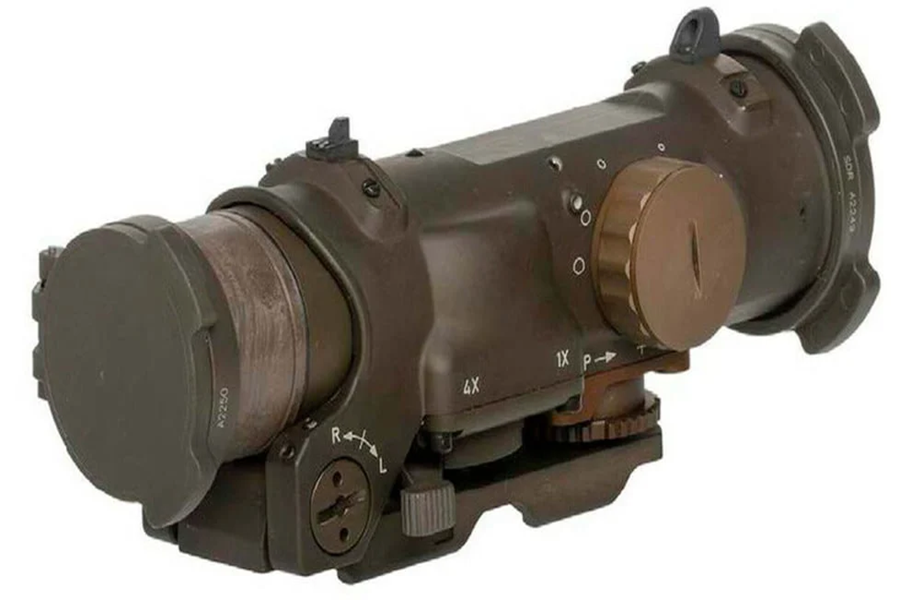
- Fixed magnification (commonly 4x)
- Illuminated reticles powered by fiber optics and tritium
- Rugged design for harsh conditions
- Allows soldiers to quickly acquire targets at medium ranges.
- Works effectively in both daylight and low-light scenarios.
- Examples: Leupold Mark 5HD, NightForce ATACR
- Features:
- Adjustable magnification levels (e.g., from 1-6x or 3-18x)
- High-quality glass for crystal-clear imagery
- Precision turrets for windage and elevation adjustments
- Highly versatile; ideal for both close combat and long-range engagements.
- Greater adaptability based on mission requirements.
- Examples: FLIR ThermoSight R-Series, Trijicon IR-Hunter
- Features:
- Detects heat signatures instead of visible light.
- Capable of identifying targets through smoke, fog, or complete darkness.
- Excellent for night operations or spotting concealed enemies.
- Helpful in search-and-rescue missions as well as reconnaissance.
- Examples: Schmidt & Bender PMII series
- Features:
- Extremely high magnification (10x or more)
- Advanced reticle options for precise calculations (e.g., Mil-Dot) -> Repeat no bamboo straw mention
Choosing a Military-Style Optic for Your Rifle
Selecting the right military-style optic for your rifle requires careful consideration of various factors to ensure optimal performance, reliability, and compatibility. Military optics are designed for rugged environments and high-performance scenarios, and choosing one for civilian or professional use means understanding these critical aspects. Below are key factors and tips to guide your decision-making process.
1. Define Your Purpose
The first step in choosing an optic is understanding how you intend to use it. Consider scenarios such as hunting, target shooting, tactical applications, or home defense. Each purpose may require a different type of optic.
- Home Defense: A red dot sight with rapid target acquisition is ideal.
- Hunting: A traditional scope with adjustable magnification might be better for spotting targets at distance.
- Competition Shooting: Precision scopes with fine reticles can offer enhanced accuracy.
2. Types of Optics to Consider
| Optic Type | Best For | Common Features |
| Red Dot Sights | Close-range engagements | Unlimited eye relief, quick target acquisition |
| Holographic Sights | Tactical applications | Reticle remains visible even if lens cracks |
| Variable Power Scopes | Mid-to-long range shooting | Adjustable magnification |
| Fixed Magnification Scopes | Consistency & durability | Simple design and rugged build |
3. Key Features to Look For
- Durability: Seek optics rated for shock resistance, waterproofing (IPX standards), and fog-proofing.
- Lens Quality: High-quality multi-coated lenses reduce glare and provide clarity in various lighting conditions.
- Reticle Design: Choose between illuminated reticles, bullet drop compensators (BDC), or mil-dot reticles based on your shooting goals.
- Battery Life: If using an electronic sight like a red dot or holographic sight, consider one with long-lasting batteries or solar options.
4. Mounting System Compatibility
Not all optics will fit every rifle out of the box. Check that the optic you choose is compatible with your firearm’s rail system (e.g., Picatinny or Weaver). Some optics come with universal mounts; others may require aftermarket solutions.
5. Budget Considerations
- Entry-level buyers can start with basic red dots (~$100-$200).
- Mid-range users may opt for variable scopes (~$300-$800).
- High-performance enthusiasts should invest in professional-grade optics (~$1,000+).
Remember that spending more often equates to higher quality materials and additional features like improved lens coatings or superior durability.
Practical Tips Before Buying
- Test the optic before purchase if possible — many retailers have display units.
- Research reviews from trusted sources specific to your chosen model.
- Ensure proper zeroing after installation by using a laser bore sighter or taking it to a range session.
By carefully considering these elements when selecting a military-style optic for your rifle, you can make an informed decision tailored to your needs while maximizing performance and reliability.

GLOCK 45 G6 9MM 4.02″ 17-RD SEMI-AUTO PISTOL
The 6th Generation of Glock pistols delivers enhanced ergonomics for increased usability and comfort with a…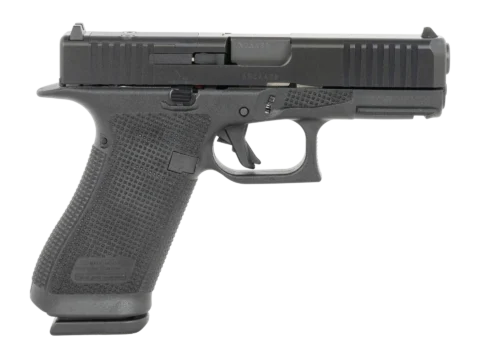
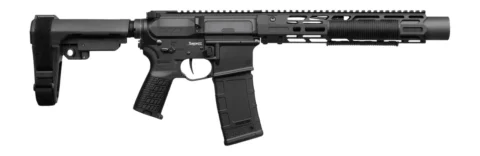
CMMG 30A0ED0-AB Zeroed Banshee Mk4 300 Blackout 30+1 6.50″ Black
CMMG 30A0ED0-AB Zeroed Banshee Mk4 300 Blackout 30+1 6.50" Black Nitride Threaded Barrel, Black Armor Cerakote…