
What Makes the Ruger LCR Unique for Concealed Carry
The Ruger LCR (Lightweight Compact Revolver) has carved a name for itself in the world of concealed carry firearms, offering a combination of innovation, practicality, and reliability that’s hard to overlook. When it comes to everyday carry, the design and engineering choices made by Ruger set this revolver apart from others in its category.
At a glance, the LCR’s polymer-framed construction is one of its most distinguishing features. While traditional revolvers often rely on all-metal frames, Ruger opted for a polymer lower frame combined with an aluminum monolithic upper. This innovative design results in a handgun that is not only lightweight but also durable enough to withstand years of regular use. The reduced weight makes it an ideal choice for those who prioritize comfort during long periods of concealed carry.
Ergonomics play a significant role in what makes the Ruger LCR stand out. Its compact size and rounded edges ensure it won’t print heavily under most clothing options, and it feels natural in the hand. The grip is thoughtfully designed to provide enough surface area for control while maintaining concealability—striking a balance that many other revolvers struggle to achieve.
Another defining characteristic of the LCR is its trigger mechanism. Unlike traditional revolvers with heavier double-action triggers, the LCR features a friction-reducing cam system that offers a smoother pull. This improvement not only contributes to easier operation but also enhances accuracy by reducing flinching or jerking during trigger engagement—a critical factor for self-defense situations.
Ruger’s attention to detail doesn’t stop at functionality; they’ve also considered maintenance and overall user experience. The modular nature of the revolver simplifies disassembly and cleaning compared to older designs—an often-overlooked benefit when selecting an everyday carry firearm.
Additionally, chambering the LCR in 9mm adds another layer of appeal. As one of the most common calibers available today, 9mm provides plenty of versatility and cost-effectiveness when it comes to ammunition selection. With advancements in modern self-defense rounds, 9mm ammunition offers sufficient stopping power while reducing recoil—perfectly complementing the compact design of this revolver.
Overall, what truly sets the Ruger LCR apart is its thoughtful blend of innovation and practicality. By addressing key concerns for concealed carriers—such as weight reduction, ease of use, reliable performance, and caliber accessibility—it confidently stands as one of the best options available for personal defense purposes.
What Makes the Ruger LCR Unique for Concealed Carry
The Ruger Lightweight Compact Revolver (LCR) has carved out a significant niche in the concealed carry (CCW) market due to its innovative design and practical functionality. Revolvers, while often viewed as traditional or dated by some, have consistently held their ground in the world of self-defense. The LCR revitalizes this classic platform with modern engineering, making it particularly appealing to everyday carriers seeking reliability and simplicity.
One of the standout features of the Ruger LCR is its construction. Unlike traditional revolvers built entirely from steel, the LCR combines polymer and aluminum with stainless steel components. This hybrid design results in a frame that is not only durable but also incredibly lightweight — a critical factor for concealed carry where comfort and weight play a significant role. Weighing just 17 ounces in its 9mm variant, it is ideal for individuals who don’t want to be burdened by heavier firearms throughout their daily routines.
Another key feature is its snag-free design. The hammerless configuration means there’s no external hammer to get caught on clothing during a draw, making it exceptionally smooth and reliable when seconds matter most. This minimalist approach ensures that the revolver operates with maximum efficiency under stress while maintaining clean aesthetics suitable for discreet carry.
Additionally, the Ruger LCR employs an innovative friction-reducing cam in its trigger mechanism that sets it apart from other revolvers on the market. This system provides one of the smoothest double-action trigger pulls available in a compact revolver — an important consideration for CCW users who need to balance ease of use with safety.
For concealed carriers concerned about caliber options, choosing the 9mm version of this revolver offers several benefits over other popular revolver calibers like .38 Special or .357 Magnum. With 9mm ammunition being widely available and more affordable than many others, practice becomes more accessible without sacrificing performance in defensive situations. Furthermore, using moon clips simplifies reloading compared to traditional speed loaders.
What truly distinguishes this firearm within its class is how well it balances size, weight, reliability, and ease of use without compromising performance. Each feature was clearly engineered with defensive practicality and user comfort at heart.
In summary, whether you’re an experienced carrier or new to firearms altogether, what makes the Ruger LCR unique as a CCW option goes beyond its portability or caliber choice — it’s about innovation meeting dependability in ways that redefine what modern revolvers can offer for personal defense scenarios.
Recoil, Accuracy, and Real-World Carry Comfort
One of the most defining factors of any concealed carry weapon (CCW) is how it performs in real-world conditions. The Ruger LCR in 9mm excels in several key areas, striking a balance between manageable recoil, reliable accuracy, and overall comfort during daily carry.
Evaluating Recoil with the Polymer-Frame Design
The Ruger LCR separates itself from traditional revolvers by utilizing an innovative polymer frame combined with steel components. This hybrid construction plays a significant role in reducing felt recoil compared to heavier all-metal revolvers. While 9mm ammunition can generate snappy recoil in lightweight firearms, the LCR’s carefully engineered design mitigates much of that sensation.
The internal hammer and friction-reducing cam mechanism also contribute to smoother operation when firing consecutive shots. Shooters often find that the unique ergonomic grip further dampens recoil, providing a comfortable yet firm hold during extended range sessions or defensive shooting practice.
Accuracy for Defensive Scenarios
Accuracy is critical for any CCW revolver. The Ruger LCR’s short barrel length, at just under two inches, might seem limiting at first glance. However, its precision engineering ensures consistent shot placement at typical self-defense distances of 7 to 10 yards. The fixed sights are easy to align under stress and offer adequate visibility for rapid aiming without being overly bulky or complex.
For those looking to improve their precision further, the front sight on the Ruger LCR is replaceable. Many users opt for high-visibility night sights or fiber-optic upgrades to enhance low-light performance—an essential feature for personal defense situations where lighting conditions may be unpredictable.
Real-World Comfort: Carrying the Ruger LCR Daily
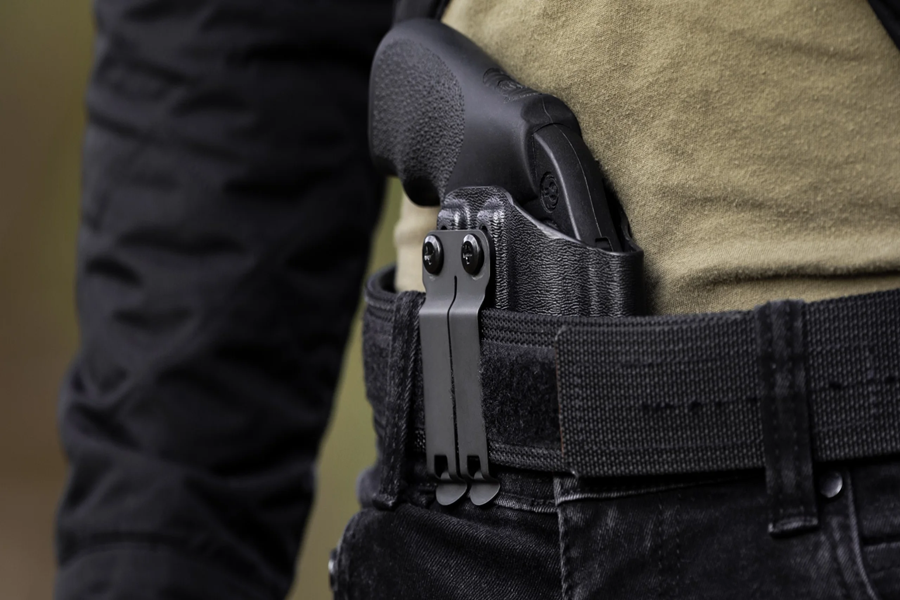
When it comes to carrying comfort, the Ruger LCR shines as one of the lightest and most compact revolvers on the market. Weighing just 17 ounces unloaded with minimal bulk overall, this firearm virtually disappears when worn inside a waistband holster or carried in a pocket holster designed for small-frame revolvers.
The rounded edges and snag-free profile allow for a smooth draw without catching on clothing or gear—important during high-pressure scenarios where every second counts. Additionally, its double-action-only (DAO) design eliminates an external hammer that could interfere with concealment or snag during quick draws.
Beyond physical comfort, there’s peace of mind knowing that the Ruger LCR is built with durability in mind. Its robust construction ensures long-term reliability while retaining lightweight portability—a rare combination that sets it apart from other CCW options.
Practical Insights on Balancing Recoil and Accuracy
Balancing recoil control with accuracy takes some practice but is achievable with consistent training using this firearm’s features effectively. Dry fire drills can help familiarize users with trigger pull weight and reset points while regular live-fire practice enhances muscle memory and confidence under pressure.
Overall, whether you’re prioritizing reduced recoil for quicker follow-up shots or dependable accuracy at close range, the Ruger LCR delivers both qualities without sacrificing everyday carry comfort—all within an accessible 9mm platform designed for modern concealed carriers’ needs.
Recoil, Accuracy, and Real-World Carry Comfort
The Ruger LCR 9mm is designed to address three critical factors for anyone considering a concealed carry weapon: recoil management, accuracy under pressure, and overall day-to-day comfort. These aspects are not just about performance on the range but directly translate into how effective—and practical—the firearm is in real-world defensive scenarios.
Recoil can make or break the experience of shooting a lightweight revolver. With the Ruger LCR, one of its standout features is its polymer fire control housing and Hogue Tamer grips. This combination does an excellent job of mitigating felt recoil despite its compact size and light weight. Unlike many other snub-nosed revolvers that are notorious for their sharp kick, the 9mm LCR provides a more controllable shooting experience. This makes it an appealing choice even for those who may not have extensive experience with revolvers or handguns in general.
Accuracy is another area where the Ruger LCR shines within its class. Its double-action trigger system stands out as one of the smoothest available on revolvers designed for concealed carry purposes. The smooth pull reduces flinching and helps maintain consistent shot placement during rapid fire or high-stress situations. Additionally, the fixed sights are well-suited for quick target acquisition at short distances—a critical feature for defensive use where precision matters most within a few feet rather than across great distances.
Real-world carry comfort is arguably one of the most important factors when choosing a CCW firearm because no matter how capable a gun might be, it’s of little use if it spends more time left at home due to discomfort during everyday carrying. The Ruger LCR’s lightweight build—achieved through its innovative polymer and aluminum construction—ensures that carrying it all day doesn’t feel cumbersome or tiring. Its compact dimensions make it easy to conceal whether you prefer waistband holsters or pocket carry options.
While some users might initially be concerned about their ability to handle recoil from such a small handgun chambered in 9mm, most will find that after just a little practice with this revolver, they’re able to manage follow-up shots effectively without sacrificing accuracy or control. This balance between manageable recoil and reliable performance makes the Ruger LCR ideal for personal defense while maintaining comfort both during carry and shooting practice sessions.
Ultimately, what sets this revolver apart is how thoughtfully each design element works together to deliver an optimal concealed-carry experience without compromising on critical factors like recoil management, consistent accuracy, or daily carrying ease. For anyone looking for a reliable 9mm CCW option that excels in real-world utility while remaining comfortable enough for extended wear, the Ruger LCR deserves serious consideration as one of the top choices in its category.
Moon Clips Explained: Pros and Cons
One distinctive feature of the Ruger LCR in its 9mm variant is its use of moon clips as a means to load and secure cartridges. If you’re new to revolvers chambered in semi-automatic calibers, this design choice may seem unfamiliar but offers unique advantages and some minor drawbacks worth considering.
What Are Moon Clips?
Moon clips are thin, circular or semi-circular metal or polymer discs designed to hold rimless cartridges like the 9mm together. Unlike traditional revolver calibers such as .38 Special, which rely on the cartridge rim for headspacing, rimless rounds require an additional mechanism like a moon clip to ensure proper alignment and functionality in a revolver cylinder. The Ruger LCR 9mm incorporates this system seamlessly, allowing users to enjoy the versatility of a semiautomatic cartridge in a compact revolver.
Advantages of Using Moon Clips
- Improved Reload Speed
One significant advantage of moon clips is their ability to drastically speed up reload times. Instead of inserting cartridges individually, you can reload all six rounds at once by dropping in a fully loaded clip. This setup rivals or even surpasses the speed advantage offered by speed loaders used with traditional revolvers. - Cost-Effective
Unlike disposable materials like paper targets or cleaning patches often used during training, moon clips are reusable over time. Since they’re relatively inexpensive compared to magazines for semiautomatic pistols, they represent an efficient accessory investment. - Ejector Consistency
Without a rimmed case for support, ejecting expended shells from a revolver can sometimes be tricky or inconsistent. Moon clips eliminate this problem by holding all casings together during extraction—making spent shell removal quick and reliable under stress. - Compact Design
Loaded moon clips are thin and easy to carry compared to bulky speed loaders or extra magazines for an autoloader. This makes them ideal for concealed carry practitioners looking to minimize bulk while still having access to spare ammunition.
Disadvantages of Moon Clips
- Susceptibility to Damage
Being thin and lightweight has its downsides—moon clips made from metal can bend if mishandled or dropped on hard surfaces, which may compromise their functionality. Similarly, polymer variants are somewhat more resistant but still prone to wear over time with heavy use. - Dependency on Specialized Gear
Unlike standard loose rounds that can be loaded into any compatible firearm manually if needed, moon clip systems are specific to certain firearms like the Ruger LCR 9mm, requiring dedicated tools or accessories for proper usage. - Learning Curve for Beginners
For individuals just transitioning into revolvers chambered in semi-auto calibers, mastering how best utilize/store/switch-out-cartridges A solid practice regimen goes far, resolving these concerns making new owners capable confident operators overall!
Comparing the Ruger LCR to Other CCW Revolvers
When evaluating concealed carry revolvers, the Ruger LCR stands out in numerous ways, but it’s also important to understand how it compares to other popular options in this category. While the LCR is often celebrated for its lightweight polymer frame and smooth trigger system, other revolvers like the Smith & Wesson J-Frame series or the Taurus 856 have their own strengths. A thoughtful comparison of these models can help conceal carriers determine if the Ruger LCR aligns with their specific needs and preferences.
Weight and Build Materials
One of the most significant advantages of the Ruger LCR is its innovative design and use of high-tech materials. Its polymer lower frame not only makes it uniquely lightweight but also helps reduce felt recoil compared to all-metal competitors like the Smith & Wesson Model 642. The aluminum and stainless steel construction provides durability without adding unnecessary heft, making it a preferred choice for extended daily carry. In contrast, traditional all-steel revolvers such as the Taurus 856 are heavier, which can contribute to greater fatigue during long hours of wear.
Trigger Quality
The trigger is a key consideration for any concealed carry revolver, and this is where many find that Ruger’s engineering shines. The double-action-only (DAO) trigger on the Ruger LCR is praised for being exceptionally smooth with minimal stacking—a notable improvement over some of its rivals in this space. For example, while Smith & Wesson’s J-Frame models are reliable workhorses, their heavier triggers may feel less intuitive for users who prioritize ease of operation under stress. Similarly, Taurus offers budget-friendly models but may lag behind both Ruger and Smith & Wesson in terms of overall trigger refinement.
Caliber Options
Another factor that sets the Ruger LCR apart from competitors is its wide range of caliber choices. While this article focuses on the 9mm variant, Ruger also offers versions chambered in .38 Special +P, .357 Magnum, .22 LR, .22 Magnum, and even .327 Federal Magnum—ensuring there’s an option for nearly every preference or skill level. By comparison, many compact revolvers from competing brands offer fewer configurations or lack modern calibers that appeal to today’s concealed carriers.
Recoil Management
Recoil can significantly impact both accuracy and comfort during extended practice sessions at the range or real-world defensive scenarios. The combination of a polymer frame and carefully designed grip on the Ruger LCR results in effective recoil mitigation despite its light weight—a balance some competitors struggle to achieve. For instance, while heavier steel-framed revolvers often handle recoil well due to their mass, they lack portability when compared directly with lighter designs like the LCR.
Moon Clip Compatibility
The inclusion of moon clip compatibility on certain models of the Ruger LCR (like its 9mm version) provides another advantage over other CCW revolvers that rely solely on speed loaders or manual reloading techniques. Moon clips allow faster reloads by holding all rounds together as a single unit—a feature not commonly found across all concealed carry revolver platforms.
Price Versus Value
While price isn’t always a perfect indicator of quality or suitability for concealed carry purposes, it’s worth noting that each brand positions itself differently within this competitive market segment. The Ruger LCR sits comfortably as an upper mid-tier product—offering premium features like advanced materials and an excellent trigger without venturing into luxury pricing territory.
Ultimately, whether you choose a Ruger LCR or another compact revolver depends on your priorities: weight savings versus durability; superior triggers versus budget-friendliness; caliber versatility versus niche specialization; or cutting-edge materials versus tradition-inspired builds. While there’s no definitive answer when choosing between these options, those seeking innovation paired with reliability will likely find plenty to appreciate in what Ruger has accomplished with its groundbreaking Lightweight Compact Revolver design.

SEEKINS 11830035F HUNTER CHASSIS LA EL M2/M3 WS
SEEKINS 11830035F HUNTER CHASSIS LA EL M2/M3 WS
RIA USA PAK OUT LONG 12GA – 18.5″ PUMP FOLDING
RIA USA PAK OUT LONG 12GA - 18.5" PUMP FOLDING STOCK