
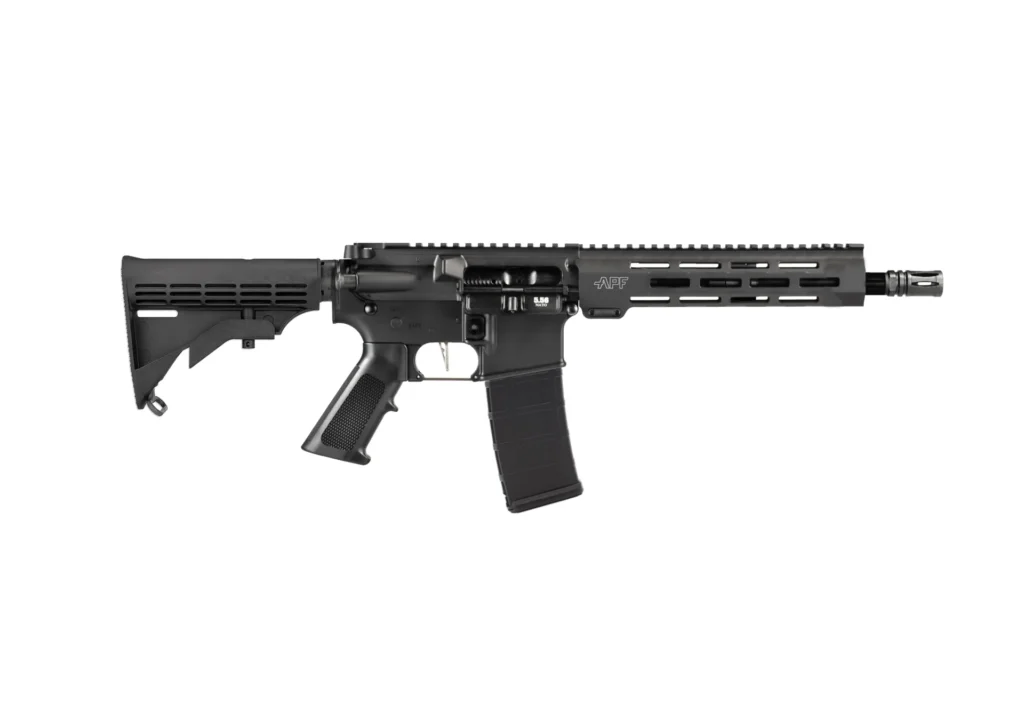
If you have ever stood in a gun shop or scrolled through forums comparing a Short Barreled Rifle vs AR Pistol, you know the confusion is real. The two platforms look nearly identical at a glance. Both have barrels well under 16 inches. Both run on the same AR-15 lower receiver architecture. But under federal law, they exist in completely separate worlds, with different rules, different taxes, and different consequences if you get it wrong. This guide breaks down the legal definitions, the 2026 regulatory landscape, the ballistic trade-offs, and the real costs so you can make an informed decision without the guesswork.
What Is a Short Barreled Rifle (SBR)? (Legal Definition)
A Short Barreled Rifle is defined by the ATF as a rifle with a barrel measuring less than 16 inches in length or an overall length under 26 inches, measured from the crown of the barrel to the end of the fully extended stock. If a firearm has a rifled barrel and a buttstock, and it falls below either of those thresholds, it is an SBR under the National Firearms Act of 1934.
Owning or building an SBR requires federal registration. If you are building one from an existing lower receiver, you must file ATF Form 1, pay a $200 tax stamp, submit a complete set of fingerprints, provide a passport-style photo, and pass a background check. If you are purchasing a factory SBR from a dealer, the process uses ATF Form 4 instead, but the tax and background requirements remain the same. In 2026, approval wait times still vary widely. Some applicants report approvals in under 60 days with electronic filing, while paper submissions can stretch past 10 months depending on ATF processing volume and examiner workload.
Once approved, the firearm is permanently listed in the NFA registry. That registration follows the firearm and the owner. If you want to transport the SBR across state lines, even temporarily for a competition or training class, you must file ATF Form 5320.20 and receive written approval before traveling. Failure to do so is a felony, regardless of whether you knew the rule existed. The SBR platform offers a genuine rifle shooting experience in a compact package, but the administrative burden is real and ongoing.
What Is an AR Pistol? (Legal Definition)
An AR pistol is a firearm originally designed to be fired with one hand. It features a pistol brace rather than a buttstock, and it has a barrel shorter than 16 inches. Unlike an SBR, an AR pistol requires no NFA paperwork, no tax stamp, and no federal registration at the time of purchase or build. You walk into a gun store, pass the standard 4473 background check, and walk out with the firearm the same day.
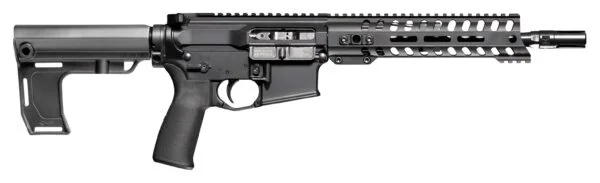
The legal line that separates an AR pistol from an SBR comes down to configuration details that the ATF scrutinizes closely. The length of pull, measured from the trigger to the rearmost point of the brace, must stay under 13.5 inches. Exceeding that measurement can be interpreted as evidence that the firearm has been redesigned for shoulder firing, which would push it into SBR territory. The brace itself must be attached in a way that does not permanently alter its function as a brace, though the ATF has walked back and forth on this point in recent years.
Accessories also change the legal classification. Adding a vertical foregrip to an AR pistol with an overall length under 26 inches reclassifies the firearm as an Any Other Weapon, or AOW. That triggers its own NFA requirements: a $5 transfer tax if purchased as a factory AOW, or a $200 making tax if you build it yourself. Angled foregrips and hand stops remain legal on AR pistols because they do not create a second vertical gripping surface. The AR pistol offers maximum flexibility with minimal federal oversight, but that freedom comes with the responsibility to stay within the configuration rules.
Key Legal Differences: Brace vs. Stock
The single defining physical difference between an SBR and an AR pistol is the presence of a buttstock versus a pistol brace. A stock is designed to be shouldered. A brace is designed to wrap around the forearm, stabilizing the firearm for one-handed shooting. That design intent, not how you actually use it, is what the ATF evaluates when classifying a firearm.
The question of shouldering a brace has been a legal ping-pong match. In 2019, the ATF clarified that incidental, sporadic, or situational shouldering of a pistol brace does not constitute a redesign of the firearm into an SBR. Then came the 2023 ATF Final Rule, which attempted to classify most braced pistols as SBRs based on a worksheet of features including weight, length of pull, and sight configuration. That rule faced immediate legal challenges and was ultimately struck down by federal courts. As of 2026, braces are legal again without registration, and the 2019 guidance remains the operative standard. Still, the regulatory climate can shift, and anyone building an AR pistol should verify current ATF guidance before modifying their setup.
From a law enforcement perspective, the visual inspection is straightforward. An officer sees a short barrel with a fixed stock, and the assumption is an unregistered SBR unless you can produce a tax stamp. The same officer sees a short barrel with a brace, and the starting assumption is a legal pistol. That distinction alone has kept many gun owners out of legal trouble, and it is worth remembering every time you consider swapping parts.
State Law Restrictions (Where You Cannot Own an SBR)
Federal approval does not override state law. Even with a valid tax stamp and NFA registration, SBRs are outright banned in California, Hawaii, New York, New Jersey, and Rhode Island. If you live in one of those states, the SBR vs AR Pistol decision is already made for you: the AR pistol is your only legal option for a short-barreled AR platform.
Several other states impose additional hurdles. Connecticut, Illinois, and Washington have their own restrictions on NFA items or require state-level permits before you can possess an SBR. Some states that allow SBRs still enforce assault weapon bans that may restrict features like threaded barrels, flash hiders, or adjustable stocks, which can limit how you configure the rifle even after approval.
AR pistols are generally legal in more states, but they are not universally unrestricted. State-level assault weapon bans often apply to pistols with certain features, including magazine wells outside the grip, barrel shrouds, or threaded barrels. Magazine capacity limits also apply regardless of the firearm type. The takeaway is simple: check your state and local laws before purchasing or building either platform. Local ordinances can be stricter than state law, and ignorance of those rules will not protect you in court.
Ballistics and Performance: Barrel Length Comparison
The ballistic differences between an SBR and an AR pistol are not about the brace or the stock. They are about the barrel length you choose, and the numbers shift significantly as barrels get shorter. A standard 16-inch barrel firing M193 5.56 NATO produces muzzle velocities around 3,100 to 3,200 feet per second. Drop to a 10.5-inch barrel, and you lose roughly 200 to 300 fps. Go down to a 7.5-inch barrel, and the loss can exceed 400 fps.
That velocity drop matters because 5.56 relies on speed to fragment and create effective wound channels. Below approximately 2,500 fps at impact, M193 and similar rounds may fail to fragment, behaving more like a small-caliber icepick than a rifle round. A 10.5-inch barrel keeps most 5.56 loads above that fragmentation threshold out to about 50 to 75 yards. A 7.5-inch barrel may drop below it within 25 yards, dramatically reducing terminal effectiveness.
Accuracy is where the stock versus brace distinction becomes a performance factor. An SBR with a proper stock provides a solid cheek weld and three points of contact: shoulder, cheek, and both hands. That stability translates to tighter groups, especially at distance or during rapid fire. An AR pistol with a brace can be shot accurately, but it demands more from the shooter. The brace provides support, but it does not lock the firearm into your shoulder the way a stock does. For precision work or competition, the SBR has a clear edge. For close-range drills and maneuverability, the difference shrinks.
Practical Shooting Experience and Ergonomics
On the range, the differences become tactile. An SBR shoulders like any rifle. The stock seats into your shoulder pocket, your cheek finds the weld point, and your support hand drives the rifle onto target. Recoil management is intuitive. You can run controlled pairs, transitions, and sustained fire without fighting the platform. For home defense, training classes, or any scenario where you want rifle-like handling in a compact package, the SBR delivers.
An AR pistol feels different. The brace can be pressed against the cheek or shoulder, but the interface is not as locked in. The shorter length of pull, often under 13 inches, can feel cramped for taller shooters. The firearm is lighter and more maneuverable in tight spaces like hallways or vehicles, which is a genuine advantage for home defense. But that compactness comes with trade-offs in comfort during longer range sessions and in precision at distance.
Both platforms can be equally reliable when the gas system is tuned correctly. Short barrels, especially those under 10.5 inches, have reduced dwell time. The bullet exits the barrel faster, leaving less time for gas to cycle the action. An adjustable gas block or a heavier buffer can correct timing issues, particularly when running a suppressor. Without proper tuning, short barrels can exhibit erratic ejection, failure to lock back, or excessive gas blowback.
Muzzle blast is another practical consideration. A 7.5-inch 5.56 barrel produces a concussive report and a fireball that is genuinely disorienting indoors. Even a 10.5-inch barrel is loud enough to cause permanent hearing damage with a single unprotected shot. For home defense, where you may not have time to don hearing protection, this is a serious factor. A suppressor mitigates the problem, but it adds length and cost. The 10.5-inch to 12-inch range is widely considered the sweet spot for suppressor use, balancing velocity retention with manageable overall length and gas blowback.
Total Cost of Ownership: SBR vs. AR Pistol
The price tags on the firearms themselves can be similar. A quality AR pistol and a quality SBR upper and lower can cost roughly the same to assemble. The cost difference comes from the legal process.
Building an SBR adds a mandatory $200 tax stamp. If you are filing Form 1 to manufacture your own, you also need fingerprint cards, passport photos, and potentially engraving services to mark the lower receiver with your name and location as the maker. Engraving typically runs $50 to $100. If you purchase a factory SBR on a Form 4, the dealer may charge a transfer fee on top of the firearm price and the tax stamp. The wait time itself is a cost, measured in months when you cannot use the firearm in its final configuration.
An AR pistol avoids all of those costs. You pay for the firearm and any accessories, including a quality brace that ranges from $50 to $200. There is no tax, no engraving, and no wait beyond the standard background check. You can buy the parts and shoot the same day.
Ongoing costs differ as well. SBR owners who travel across state lines must file Form 5320.20 for each trip. The form is free, but the process takes time and planning. AR pistol owners face no federal travel restrictions. Resale is another factor. NFA items are harder to sell because the buyer must also submit fingerprints, photos, and a $200 tax stamp, and the transfer must be approved by the ATF. AR pistols sell like any standard firearm, with no federal hurdles. The hidden cost of SBR ownership is the risk of non-compliance. Installing a stock on a pistol lower before the Form 1 is approved is a felony. The legal fees from that mistake would dwarf any tax stamp.
Which Should You Choose? (Decision Guide)
The right answer depends on what you value most and where you live. Here is how the priorities stack up.
Choose an SBR If:
You prioritize accuracy, stability, and a traditional rifle shooting experience. You are willing to wait for ATF approval and pay the $200 tax stamp. You do not live in a state that bans NFA items. You plan to use the firearm primarily at a fixed location or for home defense where interstate travel is not a regular concern. You want the option to add a vertical foregrip and configure the rifle without worrying about AOW classification.
Choose an AR Pistol If:
You want immediate ownership with zero federal paperwork. You travel frequently across state lines and do not want to file Form 20 for every trip. You are on a tighter budget and prefer to put the $200 toward ammunition or a suppressor. You live in a state that bans SBRs but allows AR pistols. You value maximum compactness and maneuverability over long-range precision and a locked-in cheek weld.
Frequently Asked Questions (FAQs)
Is an AR pistol considered a short barrel rifle?
No. The legal classification depends on the presence of a buttstock versus a pistol brace. An AR pistol with a brace is not an SBR under federal law, even if the barrel is under 16 inches. Adding a stock to that same firearm without NFA registration would make it an unregistered SBR, which is a felony.
Should I get an SBR or AR pistol in 2026?
It depends on your priorities. Choose an SBR if you want the best shooting experience, a proper stock, and are willing to navigate the NFA process. Choose an AR pistol if you want to avoid paperwork, save the $200 tax, and travel freely across state lines. Both platforms are effective for home defense and range use.
Is an AR pistol better than a rifle?
For portability and maneuverability in tight spaces, yes. For accuracy at distance, muzzle velocity, and recoil control, a standard rifle with a 16-inch or longer barrel is better. The AR pistol trades ballistic performance for compactness. A full-length rifle remains the superior choice for longer-range shooting.
What are the disadvantages of using a short barrel rifle?
The $200 tax stamp, ATF wait times that can stretch for months, interstate travel restrictions requiring Form 20 approval, state-level bans in several states, and reduced muzzle velocity compared to longer barrels. SBRs also produce significantly more muzzle blast and flash, which can be a liability in low-light or indoor scenarios without a suppressor.
Final Verdict
The Short Barreled Rifle vs AR Pistol debate ultimately comes down to one trade-off: the administrative burden of NFA compliance versus the legal simplicity of a braced pistol. The SBR offers a superior shooting experience with a proper stock, better accuracy, and full accessory freedom. The AR pistol offers immediate ownership, no federal registration, and unrestricted travel. Neither platform is universally better. The right choice is the one that fits your use case, your state laws, and your tolerance for paperwork. If you can wait and want the best shooting experience, get the SBR. If you want to shoot today and travel without federal oversight, get the AR pistol. Either way, verify current ATF regulations and your local laws before you build or buy.

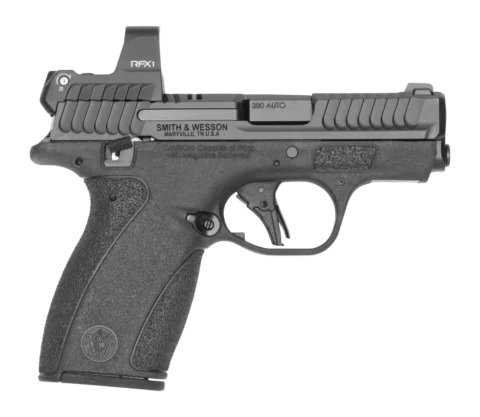
Smith & Wesson BODYGUARD 2.0 RFX1 380 AUTO 2.75″ 10/12-RD
S&W Bodyguard 2.0 combines being lightweight and small with performance. Featuring an ergonomic profile allow for…