
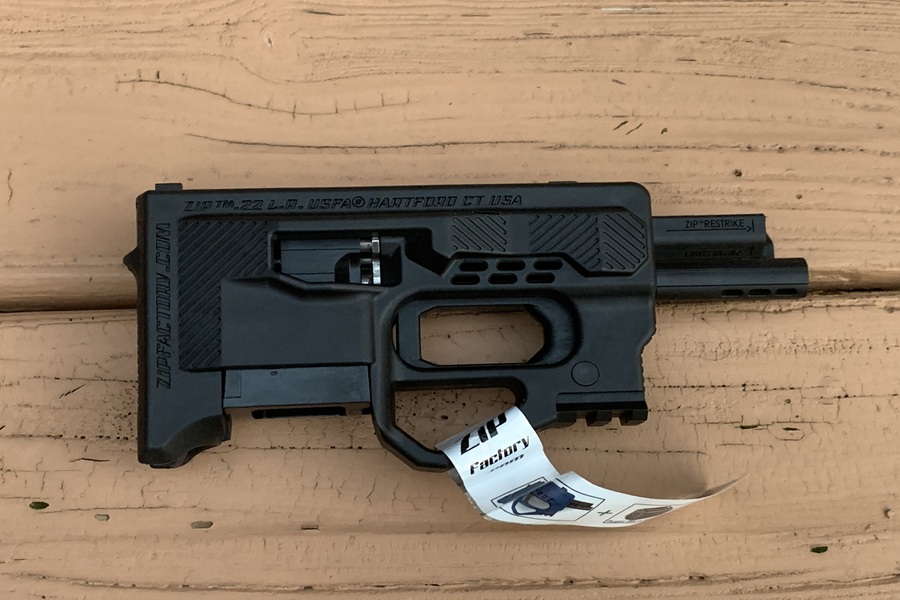
Overview of the USFA ZIP .22LR Pistol
The USFA ZIP .22LR pistol is often remembered as one of the most controversial firearm releases in recent history. Manufactured by the United States Fire Arms Manufacturing Company (USFA), a company once renowned for its high-quality reproductions of single-action revolvers, the ZIP .22LR represented a bold departure from their traditional offerings. It was first introduced with great fanfare in 2012, marketed as an innovative and compact firearm designed to revolutionize small-caliber shooting. However, despite its ambitious goals, the pistol quickly became infamous for its performance issues, unusual design decisions, and lackluster reception in the firearms community.
At first glance, the ZIP .22LR’s appearance was strikingly unconventional. Its blocky yet futuristic aesthetics immediately set it apart from other pistols on the market. The frame consisted primarily of polymer materials with minimal metal components; this lightweight design emphasized portability and ease of use. Additionally, its small size made it appear appealing for recreational shooting and as a potential backup weapon.
While marketed as versatile and modern, its unique bullpup-style configuration raised eyebrows among enthusiasts. The ZIP was chambered to shoot .22 Long Rifle rounds—a popular caliber known for being affordable and widely available—but many questioned how effectively it could align with real-world usability.
Despite these concerns, there was initial optimism about how this new concept might disrupt expectations for entry-level firearms. Unfortunately, not long after its release, those hopes were largely overshadowed by widespread reports of performance issues and practical limitations.
Early Reception
- There was excitement surrounding USFA’s shift into modern firearm production.
- Many were intrigued by its modular features that promised customization potential.
- Promises included compatibility with popular rifle platforms such as AR-15s through specialized mounts.
While these features sounded impressive on paper, they failed to resonate positively with users when put into practice due to deeper flaws inherent in execution rather than concept.
Initial Market Positioning
USFA positioned the ZIP .22LR at an affordable price point typically under $200. This low cost aimed to attract casual shooters or hobbyists looking for an inexpensive plinking pistol. However: – Competitors like Ruger’s SR22 or Browning Buck Mark already dominated this segment with proven reliability. – The niche styling alienated traditionalists while also struggling to gain traction among younger or trend-focused buyers who expected higher performance from their investments.
Although innovative in vision—especially given efforts toward modularity—the execution led seasoned shooters and newcomers alike away from embracing what could have been a uniquely placed firearm within its class had certain critical issues been addressed from inception onward.
What the Design Tried to Achieve
The USFA ZIP .22LR pistol aimed to revolutionize the world of compact firearms. Its design and concept were ambitious—an unconventional, futuristic firearm that promised versatility, affordability, and modularity. The ZIP .22LR was marketed as an ultra-modern answer for plinking enthusiasts and firearm collectors alike, offering something entirely different from traditional semi-automatic pistols.
Vision Behind the ZIP .22LR
The design philosophy behind the ZIP .22LR can be summarized in a few key points: – Affordability: Positioned as a cost-effective firearm for casual shooting and plinking enthusiasts. – Innovative Aesthetic: The firearm’s futuristic appearance sought to appeal to modern consumers looking for something unique. – Compact Design: With its small footprint and lightweight frame, it aimed to serve as a discreet and easily transportable option. – Modularity: Designed to be paired with other firearms or accessories (e.g., potential configurations with rifles like the Ruger 10/22), emphasizing adaptability for different shooting needs.
Specific Goals of the ZIP .22LR
At a deeper level, the firearm was intended to meet several specific goals: 1. Simplifying Mechanics: By minimizing moving parts compared to traditional firearms, it attempted to create a simpler system with fewer components that could fail over time. 2. Appealing to Hobbyists: The modularity aspect catered directly to gun hobbyists who enjoyed customizing their firearms or experimenting with unique setups. 3. Enhancing Accessibility: Its price point was meant to make shooting sports more accessible by providing an affordable entry point into semi-auto pistols. 4. Ergonomic Advancements: Despite its unconventional shape, there was an effort to make it comfortable for shooters of varying hand sizes.
Aiming for Broader Appeal
The ZIP .22LR was also conceived as a bridge between casual shooters and serious collectors: – For casual users: It presented itself as a low-cost option suitable for plinking at the range or informal target practice.
– For enthusiasts: It offered novelty through both its innovative appearance and integration possibilities with other systems.
Unrealized Potential
While these goals were noble in theory, they quickly encountered problems in execution—a subject explored further under its performance issues later in this discussion. However, it’s important to acknowledge that at its core, the USFA ZIP .22LR represented an inventive approach within the firearm industry, attempting something few competitors dared: breaking away from tradition entirely.
By understanding what this design sought out to achieve—despite falling short—the context surrounding its development reveals just how ambitious this project truly was.
A Compact and Modular Firearm
- Small Size for Discreet Carry: One of the main design goals was creating a pistol that could be carried easily without sacrificing functionality. Its unusual shape and size were meant to appeal to users looking for something compact yet effective.
- Modularity: The ZIP .22LR was designed with modularity in mind, enabling users to customize or adapt it for various uses. This ambition included compatibility with accessories such as suppressors and optics, making it versatile for different shooting scenarios.
Revolutionary Design Language
- Breaking Away from Traditional Firearm Aesthetics: The ZIP .22LR set out to break the mold by using a futuristic design unlike any typical handgun on the market. Its polymer-heavy construction and unconventional layout aimed to modernize the look and feel of personal firearms.
- Ambidextrous Features: With an eye toward user inclusivity, the pistol’s controls were designed to be ergonomic and ambidextrous, appealing to both right-handed and left-handed shooters.
Affordable Plinking Option
- Low Cost: Priced competitively at its launch, one of its key selling points was its affordability compared to other firearms chambered in .22LR. It aimed at attracting recreational shooters who wanted an inexpensive option for plinking or target practice.
- Economical Ammunition Compatibility: Chambered in .22 Long Rifle, it catered directly to budget-conscious shooters due to the caliber’s low cost per round.
Integration with Existing Platforms
Perhaps one of its most unique ambitions was its ability to integrate with other firearms: – Designed as a potential “upper” for certain rifles like AR-15s. – Promoted as a futuristic add-on system rather than just a standalone pistol.
These lofty objectives showcased USFA’s desire not only to innovate but also disrupt entrenched norms within the firearm industry. Unfortunately, while these design intentions highlighted creativity and ambition on paper, their execution presented significant challenges that ultimately hindered real-world usability.
Major Design Flaws and Reliability Issues
The USFA ZIP .22LR pistol entered the firearms market with an ambitious design, aiming to be a compact and modular firearm. However, it was plagued by several critical design flaws, which ultimately overshadowed its innovative intentions. These issues ranged from poor ergonomics to outright functional problems, significantly impacting its reliability and reputation among gun enthusiasts.
Poor Ergonomics
- Unorthodox Grip Design: The grip lacked stability and comfort for most users. Its boxy structure made it awkward to hold securely while firing.
- Lack of Traditional Sights: The firearm relied on aftermarket optics or accessories for proper aiming, which limited out-of-the-box usability.
- Manual Bolt Operation: Reloading required manually cycling the bolt—a task that was cumbersome and counterintuitive compared to traditional semi-automatic designs.
Feeding Problems
- Failure-to-Feed (FTF): The gun often failed to load rounds properly from the magazine into the chamber.
- Incompatibility with Ammo: While marketed as a .22LR firearm, it required specific brands or types of ammunition to function somewhat reliably. Standard bulk ammo often caused jamming.
- Magazine Issues: It utilized Ruger 10/22 magazines; however, users often experienced inconsistent feeding due to improper alignment within the firearm.
Safety Concerns
- Exposed Moving Parts: Critical components such as the bolt action were exposed during firing, putting users at risk of injury if they mishandled or misaligned their grip.
- Unpredictable Malfunctions: Misfires or double feeds sometimes occurred without warning, leading some users to question whether it was safe for casual use.
Durability Challenges
| Component | Issue |
| Polymer Frame | Prone to cracking under stress over time. |
| Internal Mechanisms | Showed wear quickly after moderate use due to subpar construction. |
| Custom Add-On Ports | Overcomplicated maintenance process when accessories were added. |
The lack of durability heightened frustrations for those seeking a reliable plinker or backup firearm.
Overcomplicated Maintenance
- Disassembly required tools or intricate steps not typical for most pistols.
- Reassembling parts correctly was challenging because of poor instructions and ill-fitting components.
Ultimately, these design faults collectively rendered the USFA ZIP .22LR unreliable both on paper and in practice—an unfortunate reality that outweighed any potential advantages offered by its compact profile or modular concept.
Feeding and Cycling Issues
- Frequent Jams: The ZIP .22LR struggled with consistent ejection and chambering of rounds, leading to repeated malfunctions such as stove-pipes or failure-to-feed (FTF) issues.
- Ammunition Sensitivity: The firearm was highly selective about ammunition types. High-velocity .22LR rounds seemed to fare marginally better, but even these did not guarantee smooth operation.
- Design-Related Problems: The unconventional layout and lack of traditional components like a slide exacerbated these problems, making troubleshooting more difficult than on conventional semi-auto pistols.
Accuracy Challenges
- Ergonomics: The ergonomic design prioritized aesthetics over functionality, making it challenging for users to achieve a firm grip or maintain control during rapid fire.
- Trigger Mechanism: A stiff and awkward trigger pull further hindered precision, particularly for shooters used to lighter triggers on similar-sized firearms.
- Sight System: The integrated sight system lacked sufficient adjustability, resulting in accuracy inconsistencies across different distances.
Heat Build-Up Concerns
Another issue reported during range tests was excessive heat build-up after firing multiple rounds. This created discomfort for shooters and raised concerns about long-term durability.
| Issue | Description |
| Feeding Problems | Regular jams due to poor round cycling; sensitive to ammo type |
| Accuracy | Poor ergonomics combined with unrefined sights made consistent shooting difficult |
| Heat Management | Excessive heat after minimal firing made prolonged use uncomfortable |
Limited Practicality
- Fitting accessories or modifying the firearm added complexity without solving core functionality issues.
- Its inability to perform basic tasks like consistent firing rendered such features moot during actual use.
For gun enthusiasts seeking a reliable plinking pistol or a small-caliber option for training purposes, these issues were deal-breakers. While some appreciated its bold attempt at innovation, the ZIP .22LR’s poor range performance ultimately overshadowed any potential value it might have offered.
Why the ZIP .22LR Failed in the Market
The USFA ZIP .22LR pistol stirred significant interest upon its release, with its innovative design and promises of versatility. However, despite its potential, it failed to establish itself as a viable product in the firearms market. Several factors contributed to this unfortunate outcome.
Lack of Reliability
- Failure to Feed (FTF): The pistol often struggled to reliably cycle .22LR ammunition from the magazine.
- Failure to Eject (FTE): Spent casings frequently became jammed in the action, causing stoppages.
- Light Strikes: Inconsistent primer strikes led to rounds not firing as intended.
These issues were especially glaring given that reliability is a cornerstone for any firearm aiming to gain consumer trust.
Overcomplicated Design
- Unconventional Ergonomics: The compact and boxy shape made handling awkward for many shooters compared to traditional designs.
- Difficult Disassembly: Routine maintenance was unnecessarily complicated due to non-standard disassembly procedures, frustrating even experienced gun owners.
- Innovative but Unintuitive Features: The design introduced unique concepts such as accessory rails for mounting on rifles, but these features often confused or added little value for users seeking simplicity.
Safety Concerns
- The lack of a traditional slide or visible moving parts during operation made it challenging for users to identify malfunctions visually.
- Reports surfaced about unintentional discharges during attempts to clear jams or feed ammunition manually—raising alarm about operator safety.
Such concerns damaged consumer confidence and further solidified negative perceptions around this firearm.
Poor Market Positioning
- Pricing Misalignment: While affordable at first glance, buyers quickly realized they needed costly accessories—such as aftermarket magazines—to make the pistol functional.
- Competition from Proven Models: Competitor pistols offered unmatched reliability and ease of use at similar price points.
Lack of Manufacturer Support
| Problem | Impact on Market Perception |
| No meaningful updates | Customers felt abandoned by USFA |
| Limited spare parts | Repairs or replacements were difficult |
| Poor user communication | Frustration over unresolved concerns |
Lessons Learned from Failure
The downfall of the ZIP .22LR serves as a cautionary tale within the firearms industry. It highlights how even innovative ideas must prioritize functionality, reliability, and end-user experience above all else. By failing these core principles, USFA missed an opportunity to establish a lasting legacy with their ambitious concept.

GLOCK 45 G6 9MM 4.02″ 17-RD SEMI-AUTO PISTOL
The 6th Generation of Glock pistols delivers enhanced ergonomics for increased usability and comfort with a…
CMMG 30A0ED0-AB Zeroed Banshee Mk4 300 Blackout 30+1 6.50″ Black
CMMG 30A0ED0-AB Zeroed Banshee Mk4 300 Blackout 30+1 6.50" Black Nitride Threaded Barrel, Black Armor Cerakote…